Last week, we left off with a drunken King Xerxes who got rid of his wife, Queen Vashti, because she refused his command to show off her beauty to the other drunken men at the king’s party.

“Four years passed between chapters one and two of Esther. According to history, the king may have gone to battle with Greece during this time. King Xerxes’ plan of controlling Greece had failed. This meant he would have returned to Susa very disappointed, ashamed, and frustrated – AND without a queen.”[i]
Esther 2:1 GNT “Later, even after the king’s anger had cooled down, he kept thinking about what Vashti had done and about his proclamation against her. 2 So some of the king’s advisers who were close to him suggested, “Why don’t you make a search to find some beautiful young virgins? 3 You can appoint officials in every province of the empire and have them bring all these beautiful young women to your harem here in Susa, the capital city. Put them in the care of Hegai, the eunuch who is in charge of your women, and let them be given a beauty treatment. 4 Then take the young woman you like best and make her queen in Vashti’s place.”
It would seem that King Xerxes had a castle full of concubines for his pleasure, but it wasn’t the same as having a queen. His advisers came up with this “brilliant” plan to recruit some beautiful, young virgins to audition for the part.

These young women weren’t necessarily volunteers. If you’ve seen The Hunger Games movies, then you can imagine the scenario. Each province was required to submit its candidates. There were 127 provinces. We can safely assume there were at least 127 young women recruited to be taken to the king for consideration. Most likely, each province drafted multiple women to better their chances of having the new queen come from their province. The women were to be young, beautiful, and virginal.
Apparently, Esther met the criteria.
Esther 2:5 NLT “5 Now in the city of Susa where the king lived there was a Jew whose name was Mordecai, the son of Jair, the son of Shimei, the son of Kish, a Benjamite. 6 He had been taken from Jerusalem with the people who had been taken away with King Jeconiah of Judah by Nebuchadnezzar the king of Babylon. 7 He had brought up Hadassah, that is Esther, the daughter of his father’s brother. For she did not have a father or mother. The young lady was beautiful in body and face. When her father and mother died, Mordecai took her as his own daughter.”
From this, we learn that Mordecai is a Jew and descends from the tribe of Benjamin. He had taken on the responsibility of raising his cousin who was an orphan. It’s implied that Mordecai is very protective of Esther. What isn’t directly said, but is important to note, is that Mordecai chose not to return to Jerusalem. As we discussed last week, this is happening around the same time as when a remnant of Jews return to their homeland. However, many Jews elected to remain in Persian territory. For some of them, perhaps their age and health prevented them from going on the journey. For many others, they were born in captivity, and this was the only home they had ever known. They didn’t have a desire to go to God’s territory.
We don’t know how old Mordecai is at this point, but we do know that he is able-bodied enough to work. Based on that, we can assume that he would have been physically able to return to Jerusalem to participate in the rebuilding of God’s temple, but he elected to remain right where he was and, as a result, Esther also remained.
Esther 2:8 NCV “When the king’s command and order had been heard, many girls had been brought to the palace in Susa and put under the care of Hegai. Esther was also taken to the king’s palace and put under the care of Hegai, who was in charge of the women. 9 Esther pleased Hegai, and he liked her. So Hegai quickly began giving Esther her beauty treatments and special food. He gave her seven servant girls chosen from the king’s palace. Then he moved her and her seven servant girls to the best part of the women’s quarters.
10 Esther did not tell anyone about her family or who her people were, because Mordecai had told her not to. 11 Every day Mordecai walked back and forth near the courtyard where the king’s women lived to find out how Esther was and what was happening to her.”
Scripture tells us that the girls were “brought to” the palace indicating that they were gathered up and didn’t necessarily come on their own accord. And we are told that the girls were placed in custody of, or under the care of Hegai who was in charge of the women. This, too, hints at the sense of ownership. Ironically, one could say that these girls were taken captive much like their ancestors had been taken captive. In fact, listen to some of the words used in the ESV translation. “So it came about when the command and decree of the king were heard and many young ladies were gathered to the citadel of Susa into the custody of Hegai, that Esther was taken to the king’s palace into the custody of Hegai, who was in charge of the women.” (Esther 2:8 ESV) This isn’t to say that some of these girls would not have been excited at the prospect of becoming queen. I mean, what young girl doesn’t dream of living in a castle, being pampered, and living as a royal queen?

Esther appears to stand out from the others. Esther, it would seem, had favor shown to her. Hegai, the custodian over the girls, was pleased with Esther and gave her special food, extra beauty treatments, and servants even, as well as the best living conditions. Esther was receiving special treatment because there was just something about her that caused Hegai to be partial towards her over all the other girls.
But, when it comes to Esther, there’s a big problem.
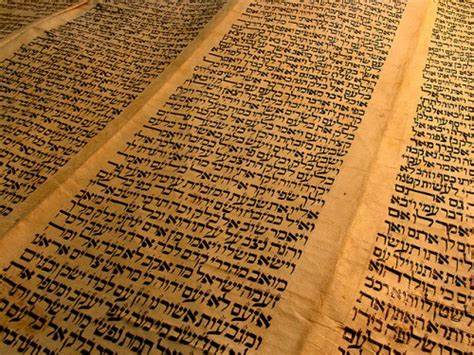
She, like her cousin/guardian Mordecai, was Jewish. King Xerxes was a Gentile. By Mosaic Law, any kind of relationship, especially marriage, was forbidden. This unwraps an even bigger problem.
Esther and Mordecai were Jews, but there was absolutely no indication of their heritage, their faith, or their beliefs. So much so that they were easily assumed to be Gentiles. Warren W. Wiersbe simplifies it for us. “If Mordecai and Esther were passing themselves off as Persians, they certainly weren’t keeping a kosher home and obeying the laws of Moses. Had they been following even the dietary laws, let alone the rules for separation and worship, their true nationality would have quickly been discovered.”[ii]
There’s a saying, “If you were accused of being a Christian, would there be enough evidence to convict you?” Some of us rely on circumstantial evidence to convict us. We have many outward appearances of being a Christian. We regularly attend church; maybe we even serve in some capacity. Perhaps we post occasional Bible verses on our social media. If we’re feeling extreme, we’ll put out a nativity scene at Christmas or a “He is Risen” garden flag at Easter. All of these tangible things could certainly give the impression that we are Christian, but not all who do these things are truly saved.
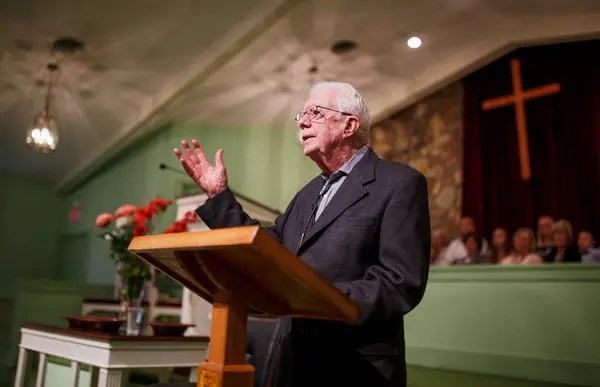
Former President Jimmy Carter certainly had enough circumstantial evidence, but realized it wasn’t enough. “As a child, Carter regularly attended a Southern Baptist Sunday school, worship services, and a youth mission organization in Plains, Georgia. At age 11, he publicly professed his faith in Jesus Christ as his personal Savior and Lord, was baptized, and joined the church. Carter was ordained in 1958 as a deacon, the governing office in Southern Baptist congregations, and ushered, led public prayers, and preached lay sermons at his home church. His failure to win the Democratic nomination for governor in 1966 prompted Carter to reassess his faith. Challenged by a sermon titled “If You Were Arrested for Being a Christian, Would There Be Enough Evidence to Convict You?” and conversations with his sister, evangelist Ruth Carter Stapleton, he vowed to make serving Christ and others his primary aim. Carter soon experienced a more intimate relationship with Christ. He read the Bible “with new interest,” went on witnessing missions, and spoke at several religious conferences. His two-week mission trip to Lock Haven, Pennsylvania, in May 1968 deeply moved him. Sharing the gospel with families in Springfield, Massachusetts, six months later made him “uniquely aware of the Holy Spirit as an integral part of my life.”
“The most important thing in my life,” Carter declared in 1976, “is Jesus Christ.” “There is no way to understand me and my political philosophy,” he proclaimed, “without understanding my faith.”[iii]
There is much to be said about Jimmy Carter’s presidency, but there is just as much if not more, to be said about the evidence of his faith, his beliefs, and his love of serving God. He has demonstrated that he wasn’t afraid of being different than those around him.

Apparently, Mordecai and Esther didn’t even have circumstantial evidence of being Jewish. There should have been something in them that set them apart. But there wasn’t. They all but denied God by not standing out and being different. Their language, their habits, their diets, and their daily routines, all worked together so that they blended in with their pagan-worshipping neighbors. They were God’s chosen people by birth, but you couldn’t tell by their life. That’s quite sad to say, isn’t it? The expectation of God for His people to be distinguished from all others applies to us as well.
Romans 12:2 NLT “Don’t copy the behavior and customs of this world, but let God transform you into a new person by changing the way you think. Then you will learn to know God’s will for you, which is good and pleasing and perfect.”
I must wonder if we recognize all the ways that we conform to this world. Are we more concerned with fitting in than we are by standing firm? Are we silent when we should be speaking up on God’s behalf? Or, do we feel that expressing our opinions is more important than sharing God’s Word? Does our attitude, behavior, language, treatment of others, choice of entertainment, and daily living align with God’s? Or have we allowed ourselves to be molded by the standards of the world in which we live?
When people are around you, do they sense that something is different? Is the evidence of our salvation and our walk with God showing in all that we do?
It seems that Mordecai and Esther had copied the behavior and customs of their pagan neighbors. They had blended in. They, unlike Daniel and his friends who also were living in an area of captivity, didn’t follow the Mosaic laws. They didn’t adhere to the rituals and practices that God required of His people. But even though Mordecai and Esther hid their Jewishness by conforming themselves to their paganist surroundings, God still has plans for them both.
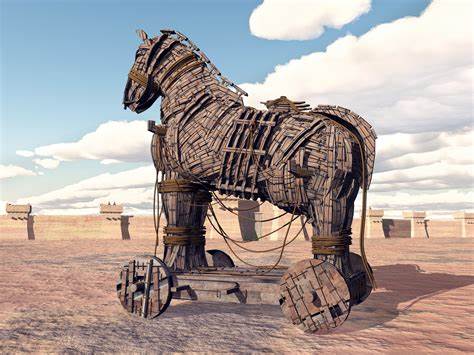
There is a story told in Greek mythology of the Trojan horse. Whether the story is true or simply a mythical tale, we aren’t certain. But as the story goes, a hollow horse was built by the Greeks during the Trojan War and gifted to Athena, the goddess of war, as a pretense of surrendering to the Trojans. The Trojans, despite multiple warnings, permitted the large horse offering into the city gates. Unbeknownst to the Trojans, the horse contained a small Greek army. When nighttime fell, the Greek army who had been hiding in the horse, snuck out, opened the city gates, snuck in more soldiers, and overtook the Trojans in their own city. The ploy was purposeful and intentional so that victory would come to the Greeks.
God used Mordecai and Esther like a Trojan horse even though they didn’t know it at the time.
I think that must be encouraging for us. The impact that Esther and Mordecai are going to make is going to be monumental. It’s going to be life-altering. It’s going to be life-changing. And it’s going to be lifesaving. And God is using a Jewish man who isn’t being obedient in his heritage and faith and a Jewish orphan whose only attribute that is obvious is her beauty. Do you ever feel useless or as if you don’t make a difference? I sometimes feel so inadequate to be of any help to God; I sometimes forget that it’s not about me, but rather it’s about God and what God can do!
“God doesn’t need a lot to do a lot. All David had was five stones. And all David used was one.”
TONY EVANS
Esther 2:12 ERV “12 Before a young woman could take her turn to go in before King Xerxes, she had to complete twelve months of beauty treatments—six months with oil of myrrh and six months with perfumes and cosmetics.”
Twelve months of preparation to meet the king seems a bit excessive. However, this wasn’t just a random period of time.
“Persia was one of many countries famous for its aromatic perfumes and ancient customs for the preparations of brides, including ritualistic baths, plucking of the eyebrows, the painting of hands and feet with henna, facial make-up, and applications of a beautifying paste all over the body, meant to lighten the color of the skin and to remove spots and blemishes.
i. One reason for the lengthy time of preparation was to tell if the women had been pregnant upon coming into the harem, so that the king would not be charged with fathering a child that was not his.
ii. Matthew Poole says that the oils and perfumes were necessary because “The bodies of men and women in those hot countries did of themselves yield very ill scents, if not corrected and qualified by art.”[iv]
Now, while we may think of a yearlong pampering as something we just might like to indulge in, there was a lot riding on this outcome. You may remember that King Xerxes was king over 127 provinces. Every province was to bring in every beautiful, young virgin. The competition to become queen was fierce! At best, you had a 1 in 127 chance to wear the crown. But the catch was that even if you weren’t selected as queen, you would remain in the harem. “Every night the king had a new partner, and the next morning, she joined the rest of the concubines. The one who pleased the king the most would become his new queen.”[v] To be with the king even for one night wasn’t just a one-night stand. “Once they had been with the king, they belonged to him and could not marry. If the king ignored them, they were destined for a life of loneliness, shut up in a royal harem.”[vi]

After 12 months of preparation, each young woman was ready to spend an evening with the king.
Each woman would spend the night with the king, implying that there were sexual relations that occurred. In the morning, she’d be taken to a new area and placed under the care of one of the king’s eunuchs. (It’s worth noting that a eunuch is a man who has been castrated. Having a eunuch in charge of these women was insurance that no other man could have sexual relations with any of the king’s concubines.) If the king was pleased with the young woman’s company, he would likely call on her again. If not, she would not return to the king for a “special evening” but would probably remain as his property.
Now consider Esther’s plight. She’s a Jewish girl and an orphan, recruited to compete to be the queen of a Gentile king. The law of Moses forbids intermarriage. If she isn’t chosen, she’d most likely be kept as part of the harem to please the king on command. This was a very risky gamble for both her and Mordecai.
Esther 2:15 ICB “15 Esther daughter of Abihail, Mordecai’s uncle, had been adopted by Mordecai. The time came for Esther to go to the king. She asked for only what Hegai suggested she should take. (Hegai was the king’s eunuch who was in charge of the women.) And everyone who saw Esther liked her. 16 So Esther was taken to King Xerxes in the royal palace. This happened in the tenth month, the month of Tebeth. It was in Xerxes’ seventh year as king.
17 And the king was pleased with Esther more than with any of the other virgins. And he liked her more than any of the others. So King Xerxes put a royal crown on Esther’s head. And he made her queen in place of Vashti. 18 Then the king gave a great banquet for Esther. He invited all his important men and royal officers. He announced a holiday in all the empire. And he was generous and gave everyone a gift.”
We are told in verse 13 that she could ask for anything she wanted. This would have meant what clothes to wear, jewelry or ornaments, or accessories. Esther, however, asks for only that which Hegai suggests. She doesn’t take advantage of this carte blanche position. She doesn’t get greedy. She doesn’t seize the opportunity to cash in on all that she could get. She only takes what is suggested.
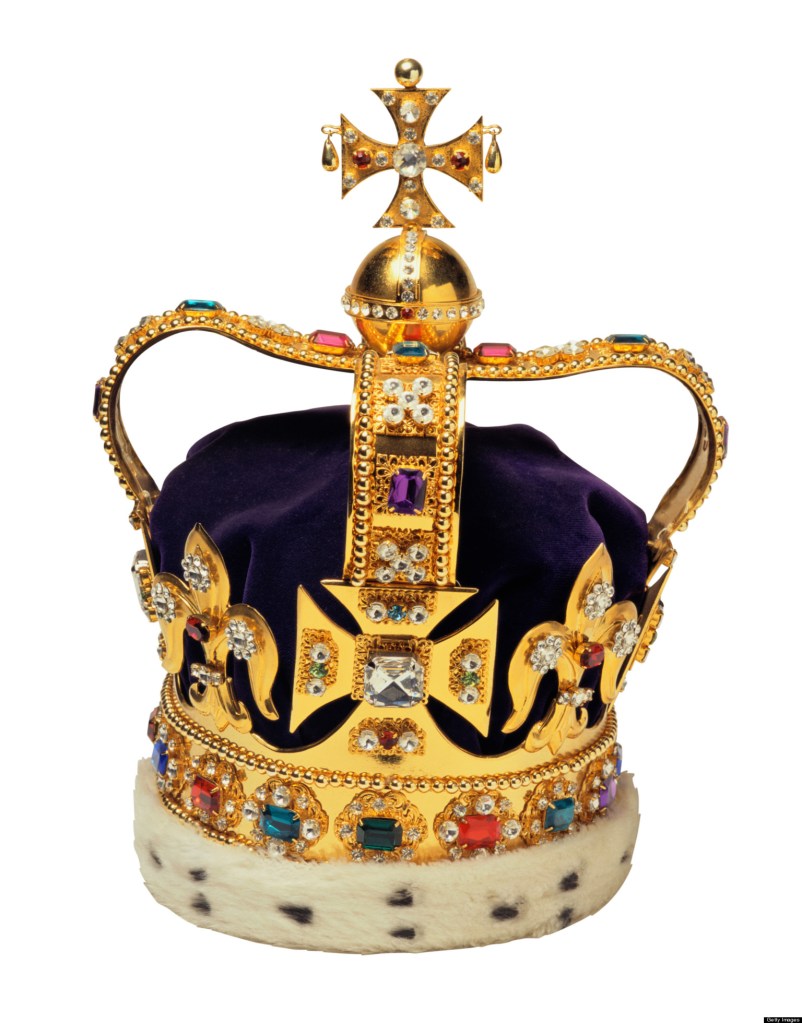
There’s no way of knowing how many other young, beautiful virgins were waiting for their first evening with the king when it’s announced, “A queen has been chosen”. Before King Xerxes has a chance to encounter all the prospects, he chooses Esther! Out of all those women representing 127 provinces, Esther is crowned queen. Imagine her surprise!
Mike Cosper wrote in “Faith Among the Faithless: Learning from Esther how to Live in a World Gone Mad”:
“Preparing to meet the king took on a contest-like quality, with each girl jockeying for the chance to become queen. Some of them probably sang; some dance or told stories; others looked for more salacious ways to dazzle and entertain the king.
But in Esther, the king encountered something different. She was beautiful for sure, but she had the knack for winning the favor of everyone she met….
…while the other girls came to him looking to delight his senses, Esther came to him to provoke his greatest weakness. This was not Xerxes the great, remember, but a defeated and humiliated king, and this beautiful girl, a girl with secrets, a girl – as we’ll see later – had political savvy and insight into the way people thought and worked…this girl came with a very different set of skills than any lyre player or singer or storyteller.
The king fell in love with the girl that preyed on his humanity.”
This is God’s providence at work here! Even though Mordecai and Esther have hidden their Jewish heritage and have forsaken the customs and laws of God’s people, God still employs Esther and places her in a position of prestige, power, and persuasion.
Romans 13:1 NLT “Everyone must submit to governing authorities. For all authority comes from God, and those in positions of authority have been placed there by God.”
Esther is somewhat like Joseph. He was sold into slavery, but favor was shown to him time and time again because of God’s providence. Joseph was eventually put into a position of power because that’s where God wanted him to be. It wasn’t something Joseph set out to achieve. Likewise, Esther is an instrument through whom God will carry out His plans. She didn’t aspire to be queen but she was drafted to the king’s service. That was God’s providence! Favor was shown towards Esther by Hegai because of God’s providence. King Xerxes chose Esther to become queen through God’s providence. And because of God’s providence, a lot is about to take place.
Esther 2:19 GNT “19 Meanwhile Mordecai had been appointed by the king to an administrative position. 20 As for Esther, she had still not let it be known that she was Jewish. Mordecai had told her not to tell anyone, and she obeyed him in this, just as she had obeyed him when she was a little girl under his care.
21 During the time that Mordecai held office in the palace, Bigthana and Teresh, two of the palace eunuchs who guarded the entrance to the king’s rooms, became hostile to King Xerxes and plotted to assassinate him. 22 Mordecai learned about it and told Queen Esther, who then told the king what Mordecai had found out. 23 There was an investigation, and it was discovered that the report was true, so both men were hanged on the gallows. The king ordered an account of this to be written down in the official records of the empire.”
It would seem that not only was Esther given an appointment, but Mordecai had also been assigned to the king’s staff. He is in a position to overhear some critical information and he does the honorable thing.
Mordecai’s attitude wasn’t “I’m a Jewish man in exile under a pagan king, so I do not care if he is killed.” Instead, he anticipates Peter’s thought in 1 Peter 2:17, before Peter ever wrote it: Fear God. Honor the king.[vii]
Because of Mordecai’s position and action, the life of the king is saved. This would seem to call for a proclamation, an award of some kind, and possibly even a parade. But only a record of the event is written down. We don’t get the impression that Mordecai did what he did for any kind of reward or recognition. He simply did what seemed to be the right thing to do. Was he disappointed that he wasn’t even thanked? Maybe. Maybe not.
But you see, God’s still working. That recognition that Mordecai deserved is going to sit simmering on the back burner for now. Esther, the unknown Jewish orphan, now named Queen, is going to find herself being stretched way out of her comfort zone. She’s going to be asked to do what she isn’t sure she wants to do. But God’s providence not only employs, but it also equips!
We aren’t that different from Mordecai and Esther, are we?
We love a good plan. We love to know what’s going to take place and what our roles and responsibilities are going to be. We especially love getting that pat on the back and the accolades when we go above the norm. We love having favor shown to us. We love doing what’s comfortable and predictable. But circumstances of life sometimes puts us in positions of not knowing where we’re headed. Not knowing our role or reason. Not getting recognition or applause. Not receiving special attention. Not being able to do what we like when we like and how we like.
But God is the same today as He was then. He still orchestrates with His providence using His people for His purposes. Just as Esther and Mordecai had no idea of their importance in God’s plan, we also are clueless at times. Situations and circumstances in our life may seem irritating, frustrating, and even scary; however, it just may be God’s providence at work.
“But God’s timing is always perfect, and He sees to it that no good deed is ever wasted.”[viii] And God’s providence will place us where He wants us and when He wants us to be used for His purposes. After all, isn’t that what it’s all about?
[i] https://bible.org/seriespage/1-esther-becomes-queen-esther-11-218#:~:text=Four%20years%20passed%20between%20chapters%20one%20and%20two,Later%2C%20the%20anger%20of%20King%20Xerxes%20calmed%20down.
[ii] Be Committed by Warren W. Wiersbe
[iii] https://www.tandfonline.com/doi/full/10.1080/15570274.2011.630205
[iv] https://www.blueletterbible.org/comm/guzik_david/study-guide/esther/esther-2.cfm
[v] Be Committed by Warren W. Wiersbe
[vi] Be Committed by Warren W. Wiersbe
[vii] https://enduringword.com/bible-commentary/esther-2/
[viii] Be Committed by Warren W. Wiersbe
 Beacons of Light