
We, being a ladies’ Bible study class, it’s not a huge surprise that we would choose to study books such as Esther and Ruth. We often find ourselves looking at other women of great nobility or admiral character to which we compare ourselves. And certainly, there’s a lot to be learned by examining Esther and other females from the Bible. We still have more to glean from Queen Esther. But today will mark the end of someone else whose life has much to teach us.
Spoiler alert! If you’re not familiar with the book of Esther, I’m about to reveal a major turn of events that you may or may not suspect.
Haman is about to die. He’s going to die on the very gallows he had built in less than 24 hours to kill Mordecai.

Whether we like it or not, there is an awful lot to be learned from Haman. Because more than likely, we probably share one, if not more, characteristics with him.
We have spent a great deal of time discussing the arrogance of Haman. We’ve talked about his ego, his boasting, his self-importance.
Up to the morning of this second dinner with Queen Esther and King Xerxes, Haman has gotten quite cocky. He has puffed himself up and manipulated the king and the system to get what he wants and what he thinks he deserves. He had a healthy helping of entitlement.

We sometimes fail to see how spoiled we are. We don’t like to be uncomfortable or inconvenienced. Let’s be honest with ourselves. We can sometimes be quite manipulative to get what we want. We sweet-talk people into doing favors for us. We gossip so that others will share our opinions. We will sometimes appear to be humble in order to be showered with compliments and praises. Let’s face it. We like to be liked. We appreciate being appreciated. There’s an innate part of us that craves and feeds off recognition, respect, and being right.
The fall of man came about because Eve wanted to be like God. Satan didn’t tempt her with beauty or comfort or things. She had all of that. The one thing she didn’t have was what Satan used to tempt her. He told her that God didn’t want her to eat from the tree because her eyes would be opened, and she would become like God.
Haman has fooled himself into thinking he has everyone else fooled. He has convinced himself that he is mighty important and highly regarded. He considered himself to be established, successful, and secure. The only fly in his ointment or thorn in his side is Mordecai the Jew. But he begins this particular day thinking that the problem is about to disappear.
You may recall that it was his wife and his friends that goaded Haman into having the gallows built for the purpose of killing Mordecai. “14 Haman’s wife Zeresh and all his friends said to him, “Have a gallows 75 feet high built, and in the morning tell the king that Mordecai should be hanged on it. Then go with the king to the banquet contented.”
It seemed like a good idea to Haman, so he had the gallows built.” (Esther 5:14 NET)

But the day didn’t go as he had planned. That’s when his ego takes a gut punch. Instead of leaving the meeting with the king holding a death warrant for Mordecai, Haman was assigned to promote the honoring of Mordecai. Afterward, Haman is so devastated, disappointed, and distraught, he covered his head in mourning and scampered his way back home. He meets back up with the same group that had given him the suggestion of the gallows just hours before. Esther 6:13 ERV “ 13 Then Haman told his wife Zeresh and all his friends everything that had happened to him. His wife and the men who gave him advice said, “If Mordecai is a Jew, you cannot win. You have already started to fall. Surely you will be ruined!”
For a moment, consider if Haman’s wife and friends had given him different advice. Suppose they suggested that he go and make things right with Mordecai. Apologize to him. Congratulate him on being honored. Would things have turned out differently for Haman?
“The one who walks with the wise will become wise, but a companion of fools will suffer harm.”
proverbs 13:20 csb
You see, it matters who we listen to. It makes a difference where we get our direction, our counsel, and advice. It’s important to seek out those who will encourage us to be sensitive to the Holy Spirit. If we surround ourselves with those who pray on our behalf, then we are more likely to be obedient to God’s plan. It’s when we allow the opinions and suggestions of those who are reckless and flippant (and sometimes a bit arrogant) with their viewpoint to be our guide that we can’t hear the nudging of the Holy Spirit and we end up derailed from where God wants us. We should never let the opinions or ideas of others reroute us from where God is taking us. And the flip side of that is just as true and just as important. We should keep a tight leash on our opinions, our suggestions, and our ideas unless we feel prompted by the Holy Spirit to share them.
Abraham Lincoln once said, “It is the man who does not want to express an opinion whose opinion I want.”
God’s ways are NOT our ways. We don’t always understand what He’s doing and quite frankly, there are so many times in which His ways make absolutely no sense to us at all! But He is God, and we are not. His way and His timing are always perfect; the same cannot be said for our ways and our timing. That’s why we must surround ourselves with godly people who allow God to direct their paths and not bulldoze their own way through life. People who encourage us to seek God and trust Him even when we don’t understand what He’s doing.
Another thing we can learn from Haman is his negative obsession with Mordecai.
Haman allowed his anger and hostility towards Mordecai to consume him. He even said to his wife and friends that he couldn’t enjoy any of the things in his life because he had to see Mordecai sitting at the king’s gate every day.
“Sensible people control their temper; they earn respect by overlooking wrongs.”
proverbs 19:11 net
How many of us have trouble remembering what we had for breakfast, but what someone did to us or said to us 5 years ago is front and center in the memory department of our brain? We operate on a two-way street when it comes to this. We like that God forgives us. “The second we repent, God tears the page with our sin out of the biography of our life and throws it into a shredder. He then takes the shredded pieces, lights them on fire, and throws the ashes into the deepest crevice of the ocean.”[i] Yeah, we love that about God. But us? We have a large vault that holds all the wrongs that have been done to us – whether on purpose or not – and the dial on that vault is worn down because we often open it to keep the memories fresh.
We can easily become negatively obsessed with other people as well as the circumstances of our life. Maybe our marriage doesn’t seem to be as happy as other people’s marriage and instead of making it better, we permit ourselves to feel jealous of those with what seems like a perfect marriage. Perhaps our boss or a co-worker or even a family member irritates us just by being there. But instead of trying to see and experience the good in them or even understand why they act the way they do; we find ourselves content and justified with the irritation and make no effort to change that. The list is infinite of things or people that we allow to corrupt the blessings in our lives. Haman should have been content and satisfied with the station of life he was in, but he could not enjoy any of it simply because he had to see one person. When we fixate on what isn’t ideal in our opinion, we minimize the appreciation of what is good.
Haman had spent his time conniving, plotting, and manipulating. All for his glory, his honor, and his prestige.
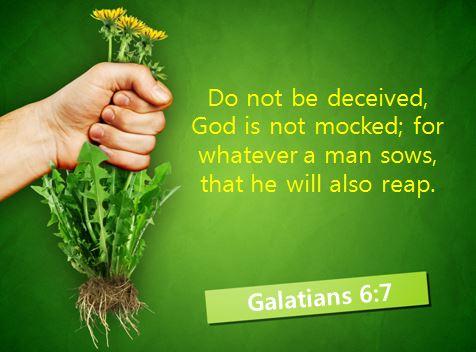
Galatians 6:7 ICB “7 Do not be fooled: You cannot cheat God. A person harvests only what he plants. 8 If he plants to satisfy his sinful self, his sinful self will bring him eternal death. But if he plants to please the Spirit, he will receive eternal life from the Spirit.”
Going back to chapter 3 of Esther when we are first introduced to Haman, here are some of the descriptions or phrases that are used in conjunction with his name. You’ll most likely notice that several of these are repeated.
Angry (Esther 3:5)
Not satisfied (Esther 3:6)
Wanted to find a way to destroy (Esther 3:6)
Enemy of the Jews (Esther 3:10)
Ruin, kill, completely destroy (Esther 3:11)
Take everything that belongs to the Jews (Esther 3:13)
Angry (Esther 5:9)
Very mad (Esther 5:9)
Anger (Esther 5:10)
Bragging (Esther 5:11)
Bragging (Esther 5:11)
Bragging (Esther 5:11)
Means nothing (Esther 5:13)
I cannot be happy (Esther 5:13)
I’m sure the king is talking about honoring me. (Esther 6:6)
Special robe, special mark, important leaders, honor (Esther 6:8-9)
Embarrassed (Esther 6:12)
Ashamed (Esther 6:12)
Cannot win (Esther 6:13)
Fall (Esther 6:13)
Ruined (Esther 6:13)
Haman has planted a whole field of selfish driven, manipulative, and hate-filled crops. And now, it’s harvest time!
Esther 7:1 ERV “So the king and Haman went to eat with Queen Esther. 2 Then as they were drinking wine on the second day of the party, the king again asked Esther a question, “Queen Esther, what is it you want to ask for? Ask anything and it will be given to you. What do you want? I will give you anything, even half my kingdom.”
3 Then Queen Esther answered, “King, if you like me and it pleases you, please let me live. And I ask you to let my people live too. This is what I ask for. 4 I ask this because my people and I have been sold to be destroyed—to be killed and wiped out completely. If we had just been sold as slaves, I would have kept quiet, because that would not be enough of a problem to bother the king.”
5 Then King Xerxes asked Queen Esther, “Who did this to you? Where is the man who dared to do such a thing to your people?”
There are just five verses but a lot of information is revealed in these verses.
Queen Esther is very delicate when she makes her request. Warren Wiersbe said, “During the previous twenty-four hours, Esther had probably rehearsed this speech many times, and now God gave her the strength to deliver it. Remember, she was taking her life into her hands, for if the king rejected her plea, that was the end.”[ii]
She makes it clear from her first sentence that she wants the king to be pleased. This would have set the tone for the conversation. It would be like a conversation that we may have that begins with, “If it’s okay with you…” Beth Moore said, “God used Esther’s approach: mannerly, feminine, sweet, smart, and shrewd.”[iii]
Then without specifying who her people are, she makes a plea on behalf of herself and her people. She states that she wouldn’t have troubled the king if they were simply being sold into slavery, but because there was a bounty on her head as well as others, she’s bringing this to his attention.
The king doesn’t question what she means by “her people”. All he seems to be concerned about is that someone has threatened her. He’s perplexed and confused. Who has done this?
Esther 7:6 GNT “Esther answered, “Our enemy, our persecutor, is this evil man Haman!” Haman faced the king and queen with terror.”

This scene is quite a parallel to the exchange between King David and Nathan. When David is confronted with a situation that mirrored what he himself had done with Bathsheba and Uriah, he is outraged. But when Nathan pointed out to David that he was, in fact, the actual offender, he was grieved by his own actions. David eventually responded appropriately.
Our own sins should be enough of a distraction and concern to keep us from focusing on the sins of others, but they rarely are. It’s more comfortable to lay the blame at someone else’s feet.
King Xerxes’ mind had to be reeling. “Without openly accusing him, Esther had implicated the king in a horrible crime, and he was bound to feel guilty. The king knew that he had impetuously approved the decree. But he didn’t realize that the decree was part of a conspiracy. He had signed the death warrant for his own wife! The king had to find a way to save his wife and save face at the same time.”[iv]
King Xerxes finds himself in a sticky predicament. His hands are not clean in this and he knows it.
And then there’s Haman. Although King Xerxes should have shared the blame, the mastermind behind it all was Haman. He thought he had it all worked out. He assumed he was in control and had been successful in his manipulation. Haman didn’t realize that God was behind the scenes of all that was taking place and God cannot be fooled. Haman thought he was the clever one but he is about to find out he is sadly mistaken.
A young boy enters a barber shop and the barber whispers to his customer, “This is the dumbest kid in the world. Watch while I prove it to you.”
The barber puts a dollar bill in one hand and two quarters in the other, then calls the boy over and asks, “Which do you want, son?”
The boy takes the quarters and leaves.
What did I tell you?” said the barber. “That kid never learns!”
Later, when the customer leaves, he sees the same young boy coming out of the ice cream store. “Hey, son! May I ask you a question? Why did you take the quarters instead of the dollar bill?”
The boy licked his cone and replied, “Because the day I take the dollar, the game’s over!”[v]
Haman is a lot like the barber in that story. He thinks he has it all figured out. He has been greedy, and he continues to take. He continued his manipulations and his climb to more authority, more control, and more comfort. He’s sown seeds of selfishness and it’s himself that’s about to suffer.
Esther 7:7 CEV “The king was so angry that he got up, left his wine, and went out into the palace garden. Haman realized that the king had already decided what to do with him, and he stayed and begged Esther to save his life.”
The king is full of rage. He’s experienced an epiphany. His wife is a Jew. There’s an irreversible order to kill the Jews- including his wife. His secondhand man is responsible for all of this, and the king has been made a fool of. This is a massive tangle of facts, and he needs a moment to clear his head.
Meanwhile, Haman who strived to be an all-controlling and domineering leader in a Gentile nation now finds himself groveling for his life at the feet of a Jewish woman! Tell me God doesn’t have a sense of humor! Haman worked closely with the king. He knows him. He knows his moods, his hasty decision-making, and his contempt for those who embarrass him. Without a word spoken by the king, Haman knows that his life is in jeopardy and the only hope he has for surviving the day is found in Queen Esther, the Jew.
Esther 7:8 TLB “ 8 In despair he fell upon the couch where Queen Esther was reclining, just as the king returned from the palace garden.
“Will he even rape the queen right here in the palace, before my very eyes?” the king roared. Instantly the death veil was placed over Haman’s face.”
“A Jewish writing says that the angel Gabriel pushed Haman, so he fell on Esther’s couch just as King Ahasuerus was coming back into the room.”[vi]
King Xerxes walks back into the room just as Haman finds himself in a compromising position with the queen. And that’s all it took. What King Xerxes has just discovered about Haman and the threat of death that hangs over Esther’s head as well as this most inappropriate physical position Haman is now in, is enough for the king to order an immediate execution.
Last week, we counted the “just so happens” that had placed Esther and Mordecai, King Xerxes, and Haman where they were, when they were, and how they were. God has one more “just so happens” when it comes to Haman.
“9 Harbona, one of the eunuchs attending the king, spoke up: “Look over there! There’s the gallows that Haman had built for Mordecai, who saved the king’s life. It’s right next to Haman’s house—seventy-five feet high!”
The king said, “Hang him on it!”
10 So Haman was hanged on the very gallows that he had built for Mordecai. And the king’s hot anger cooled.” (Esther 7:9-10 MSG)
How ironic! Haman assumed he had been successful in fooling the king. He was wrong.
“People who set traps for others get caught themselves. People who start landslides get crushed.”
proverbs 26:27 gnt
We would be wise to never assume that God is fooled by our selfish and manipulative ways. He sees, hears and He knows our actions and the motivations behind them. He isn’t tricked or deceived no matter how clever we think we might be. He even knows when our motives are selfish even when we don’t realize it ourselves.
Let Psalm 139:24 ISV be part of our daily prayer. “See if there is any offensive tendency in me, and lead me in the eternal way.”
[i] Does God Forget Our Sins? (christianity.com)
[ii] Be Committed by Warren W. Wiersbe
[iii] Esther: It’s Tough Being a Woman by Beth Moore
[iv] Be Committed by Warren W. Wiersbe
 Beacons of Light