
Esther 8:1 GNT “That same day King Xerxes gave Queen Esther all the property of Haman, the enemy of the Jews. Esther told the king that Mordecai was related to her, and from then on Mordecai was allowed to enter the king’s presence. 2 The king took off his ring with his seal on it (which he had taken back from Haman) and gave it to Mordecai. Esther put Mordecai in charge of Haman’s property.”
“When a criminal was executed, everything that belonged to him became the property of the crown, and was disposed of according to the king’s pleasure. It pleased Ahasuerus to make over to Esther the house of Haman, with, no doubt, all its content, attendants, furniture, and treasure.”[i]
Even though it was now well-known that Esther and Mordecai were related, it would have been insulting to the king for Esther to basically re-gift Haman’s property to Mordecai. Instead, she made him custodian of it.
When we first met Mordecai and Esther, their situation was quite different than what we find in Chapter 8. In the beginning, they were Jewish but did not live their lives in a manner that made that evident. Since that time, they’ve fasted and prayed and relied on God’s providence. Esther has gone from being an orphaned Jewish girl to being the queen. Mordecai has been promoted from working at the gate to taking over Haman’s position as Prime Minister.
Every aspect of their lives has changed. Their living conditions have improved. Their authority has increased. Their social status is completely different. And their Jewishness is much more integral to their identity. Whereas before, they were just ordinary common folks; now they are household names.
Most likely, if someone had told Mordecai and Esther about the changes in their lives that would take place, they probably would have laughed. If they were told of the impact and influence they would have on the Jewish population, they wouldn’t have believed it.

From where Esther and Mordecai began to where we find them in chapter 8 is night and day. The transformation is mind-blowing. The events that have taken place have occurred at various speeds from great delays to almost chaotic.
Let’s get a perspective on the timeline of the crucial events that took place.
According to Esther 2:16, Esther meets King Xerxes when he was in his 7th year as king. Shortly afterward, Mordecai prevents the king from being assassinated.

Fast forward five years. In Esther 3:7 we are told it’s the first month of the 12th year of King Xerxes’ reign. The month is Nisan. By this time, Haman has been appointed as Prime Minister and been insulted by Mordecai. And this is when Haman cast lots to pick the date of execution for the Jews. The 13th day of the 12th month which is Adar is randomly chosen.
Esther 3:12 lets us know that the proclamation was sent out on the 13th day of the 1st month.
The fasting and praying goes on for three days which we can figure to be days 14 through 16 of that 1st month. This coincides with their Passover.
Day 17 of the first month is when Queen Esther approaches the king and has the king and Haman over for their first dinner. Later on that evening is when Haman begins the rush job of building the gallows.
That same night and into the next morning (days 17 and 18), the king can’t sleep, and Haman goes to ask for Mordecai to be killed. The king decides he wants to honor someone, and Haman assumes it’s him. Instead, Haman carries out an honorary parade for Mordecai and then runs back to his home in humiliation. Later on day 18, Haman is summoned to the second dinner with the king and queen.

Still, on the 18th day, it’s revealed that Esther is Jewish and Haman is identified as an evil manipulator. As a result, Haman is killed on the very gallows he had just ordered to be constructed.
This brings us to Chapter 8. “That same day” indicates that King Xerxes wasted no time in seizing Haman’s property and turning it over to Queen Esther. Most likely, this was done as a “Sorry I was going to let you be killed” gift. It’s also indicated that Esther informs the king that Mordecai is her cousin and was her guardian. Mordecai is then named as Haman’s successor and is given the all-powerful signet ring.
So, in those 5-6 days, the turn of events is mind-blowing. The Jews as a whole went from confusion and chaos because of the threat and promise of execution from Haman to seeing his lifeless body on the gallows.
As Queen Esther and Mordecai praised God in this victory, they surely were thinking that all would be well from here on out. Haman is now dead.
But Haman left a legacy that continued to threaten the Jews.

We deal with a lot of traffic around here. Have you ever found yourself at a standstill where you’re literally moving inches at a time? And then somehow, things clear up and you’re moving forward and thinking, “OK! I’m glad that we’re getting somewhere now!” only to find yourself at another standstill. And it’s a perpetual tease. We’re moving. No, we’re not. Oh, there we go! Nope; we are stopped again. It looks like it’s clearing. Wait. No, it’s not. It’s a frustrating experience. Especially when you finally get to the point where it does open up and you can find no reason for the delays. There are no wrecks, no debris on the road, no construction, no one with car troubles, or anything that explains the waiting.
I think it’s safe to assume that’s how Queen Esther and Mordecai began to feel.
With Haman out of the way and all their secrets revealed, it should be time to take a deep breath and relax. But there’s this little order of genocide that’s still in effect. Even with Haman gone and Mordecai in his place, the Jews are still slated to be annihilated in a few months.
Esther 8:3 GNT “3 Then Esther spoke to the king again, throwing herself at his feet and crying. She begged him to do something to stop the evil plot that Haman, the descendant of Agag, had made against the Jews. 4 The king held out the gold scepter to her, so she stood up and said, 5 “If it please Your Majesty, and if you care about me and if it seems right to you, please issue a proclamation to keep Haman’s orders from being carried out—those orders that the son of Hammedatha the descendant of Agag gave for the destruction of all the Jews in the empire. 6 How can I endure it if this disaster comes on my people, and my own relatives are killed?”
We can dissect this a bit and draw some conclusions based on previous events.
Verses 1 and 2 of Chapter 8 are written so that we know Queen Esther and Mordecai are in the king’s presence. In verse 3, there are a few words that are used which indicate that some time has passed between verse 2 and verse 3. Then Esther speaks to the king again. Now, yes, it could be argued that this took place right after the king gives her Haman’s property and puts the ring on Mordecai’s finger. But Esther would have had a major mood swing take place because one minute she would be ceremoniously giving control over to Mordecai of Haman’s property and then she’s throwing herself at the king’s feet, crying and begging the very next minute. That doesn’t come across as a reasonable transition.
The significant indicator that this took place at a later date is the fact that the king extends the gold scepter to her. This wouldn’t have been done if they had already been conducting the business that’s described in verses 1 & 2. Esther and Mordecai would have already been with the king and there would be no need for the king to extend the scepter. We aren’t told how much time has lapsed between Haman’s death and this second plea of Esther to save the Jews but it’s probably been long enough that Esther and Mordecai are thinking that something should have taken place at this point.
Do you ever find yourself making assumptions about how things are going to turn out and when they’re going to happen and then all you can hear are cricket noises?
Nothing’s happening. You’ve been grooving on down the road anticipating making it to your next destination right on time and yet, you’ve hit the brakes. There’s nothing a red sea of brake lights ahead of you. You’re only moving inches at a time. Your GPS estimated arrival time begins to look a lot less promising. The frustration, confusion, and disappointment start increasing and taking control of your thoughts and emotions.
This could be concerning your job. Maybe you’ve been waiting for a promotion or a new assignment and it just hasn’t happened like you expected. Perhaps you had thought your finances would be in better shape at this point and they’re not. This could even pertain to a relationship that you assumed would be better, closer than it is. Just when things are moving right along, you find yourself at a standstill getting more and more frustrated by the day.
Lamentations 3:25 CSB “The LORD is good to those who wait for him, to the person who seeks him.”
But we don’t like to wait. Waiting is for people who have nothing better to do. Waiting is for those who don’t have a plan. Right?!? When forced to wait, we can become somewhat intolerant, frustrated, and hopeless. When our “name and claim it” proclamations don’t zap what we want when we want it, our faith can begin to suffer.
“ We are a microwave generation serving a Crock-Pot God. ”
T.D. Jakes
It’s in these periods of waiting that Satan loves. He takes advantage of those times and stirs up feelings of doubt, and he masterfully persuades us to take matters into our own hands. Abraham and Sarah grew impatient, waiting on a child. Hagar gets recruited, conceives a child, and Ishmael is born. And as a result, there were a lot of hurt feelings and a ginormous amount of animosity.

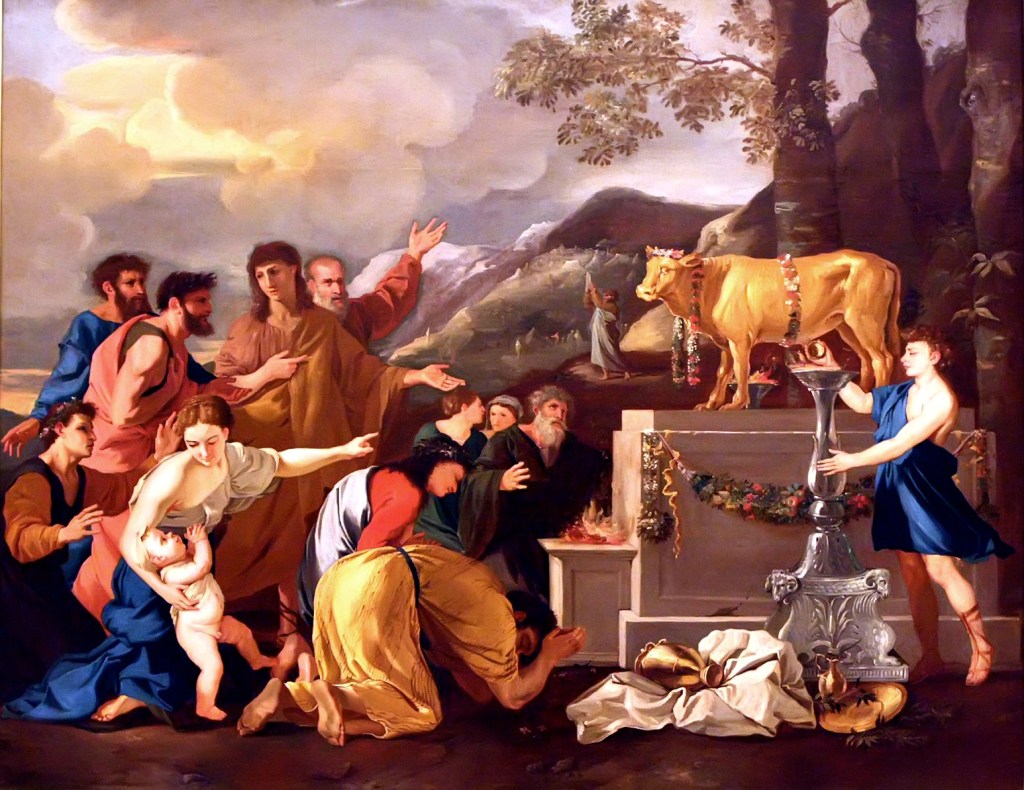
In Exodus 32, the Israelites became restless while waiting on Moses to return from Mt. Sinai where he was meeting with God. They go to Aaron asking him to make them a god they could worship. After donations of jewelry were gathered, the golden calf was built. God was angry and was ready to destroy them.
Charles Spurgeon said, “Do not be in a hurry; do not expect to be delivered out of your trouble the first time you begin to cry unto God. Oh, no: ‘the Lord is good unto them that wait for him, to the soul that seeketh him.’ [ii]
Queen Esther had waited. She had made her first plea to King Xerxes and Haman was eliminated because of that. But she had not accomplished all that she needed. The Jews are still in danger. Her plea to the king is almost pitiful.
“If it pleases the king…”
“If I have found favor with him…”
“If he thinks it is right…”
“If I am pleasing to him…” (Esther 8:5)
And then in verse 6, she makes it personal. Esther 8:6 GNT “How can I endure it if this disaster comes on my people, and my own relatives are killed?”
Beth Moore states, “She bundles two attitudes together; the king’s love for her and his approval of her plan. In other words, to be pleased with me is to be pleased with my plan, and to love me is to do what I ask.”
Esther has been queen for over 5 years at this point. She’s lived in Persia even longer than that. She knows full well that any law, including the one that Haman put into effect, can’t be changed. It can’t be undone or revoked, even by the king. But that doesn’t mean she doesn’t intercede on behalf of those who would seem to have no hope.
Even when the situation seems to be unchangeable, going to the One in control demonstrates our faith that even still, something can change.
“Satan can’t keep God from answering our prayers, but he will keep us from asking.” Adrian Rogers
Esther cleverly makes a plea to King Xerxes. I don’t think Esther depended on the king to resolve this issue on his own. It’s my belief that Esther went to the king as a demonstration of her faith in God. She went to her earthly king as a means to channel her Heavenly King. I believe that Esther knew King Xerxes could do little, but she had faith that God could do a lot.
Esther 8:7 NKJV “7 Then King Ahasuerus said to Queen Esther and Mordecai the Jew, “Indeed, I have given Esther the house of Haman, and they have hanged him on the gallows because he tried to lay his hand on the Jews. 8 You yourselves write a decree concerning the Jews, as you please, in the king’s name, and seal it with the king’s signet ring; for whatever is written in the king’s name and sealed with the king’s signet ring no one can revoke.”
As far as Xerxes was concerned, he had done all he could do which didn’t really address the issue. He had had Haman killed and he had turned over all of Haman’s property to Esther, but he didn’t address the case of the upcoming day of purging scheduled for the Jews. His attitude was, “What more do you want?” King Xerxes doesn’t seem to want to be bothered with this any longer. He’s done what he could do and anything else would require thinking and effort and well, he’s just not invested.
Instead, he simply suggests that Mordecai and Esther do whatever they want and sign his name to it. That transference of authority is what’s going to reverse the irreversible.
Esther 8:9 NIV “9 At once the royal secretaries were summoned—on the twenty-third day of the third month, the month of Sivan. They wrote out all Mordecai’s orders to the Jews, and to the satraps, governors and nobles of the 127 provinces stretching from India to Cush. These orders were written in the script of each province and the language of each people and also to the Jews in their own script and language. 10 Mordecai wrote in the name of King Xerxes, sealed the dispatches with the king’s signet ring, and sent them by mounted couriers, who rode fast horses especially bred for the king.”

This is taking place on the 23rd day of the third month. This is 2 months after the first decree is published. This new decree will address the upcoming event that is slated to occur in 8 months. But there was no delay in getting the good news out to the Jews. The message was sent out by couriers mounted on fast and swift horses. There was exciting news to share! Information that would save lives. And even though there were still months before it would take place, Mordecai wasted no time in spreading the news so that the Jews would be prepared.
I was talking with a friend this week who is coming up on the first anniversary of her sister’s suicide. A year ago, when I first heard about the death, I remember thinking of all of the conversations I had with her, and not once had I shared my faith with her. I sensed that not only was she not a Christian, but also, felt as if she had never been told about God. I had conversations with other Christians about her and we all had the same opinion. Our friend and colleague had died without knowing Jesus.

Mordecai had news that would save people’s lives. We have news that would save people’s lives. Mordecai didn’t wait to share his news, but we are often hesitant to share our good news because we don’t want to infringe on someone’s beliefs or we don’t want to be offensive or too pushy.
Romans 10:13 ERV “13 Yes, “everyone who trusts in the Lord will be saved.”
14 But before people can pray to the Lord for help, they must believe in him. And before they can believe in the Lord, they must hear about him. And for anyone to hear about the Lord, someone must tell them. 15 And before anyone can go and tell them, they must be sent. As the Scriptures say, “How wonderful it is to see someone coming to tell good news!”
If you were to host a party and you could only invite those with whom you had shared the gospel, how big of a venue would you need?
God changes the unchangeable. He reverses the irreversible. He rights what is wrong. And He saves what is lost.
Mordecai, by the hand of God, doesn’t revoke the order. What is done is even better and more empowering to the Jews.
Esther 8:11 GNT “11 These letters explained that the king would allow the Jews in every city to organize for self-defense. If armed men of any nationality in any province attacked the Jewish men, their children, or their women, the Jews could fight back and destroy the attackers; they could slaughter them to the last man and take their possessions. 12 This decree was to take effect throughout the Persian Empire on the day set for the slaughter of the Jews, the thirteenth of Adar, the twelfth month. 13 It was to be proclaimed as law and made known to everyone in every province, so that the Jews would be ready to take revenge on their enemies when that day came. 14 At the king’s command the riders mounted royal horses and rode off at top speed. The decree was also made public in Susa, the capital city.”
With this new order, the Jews were given the power to protect themselves and their families. If they were to be attacked, they would be permitted to fight back and destroy their attacker. And, they had the authority to assume the possessions of those who sought to kill them. How empowering that must have been! The Jews now had a right and the time to weaponize themselves to fight back. As much as they delighted in knowing that they weren’t helpless in this planned attack, it was more rewarding to know that someone cared. Mordecai, by way of God’s intervention, had recognized them and made the impossible possible.
The disciples were once amazed at the authority and power given to them.
Luke 10:17 ISV “17 The 70 disciples came back and joyously reported, “Lord, even the demons are submitting to us in your name!”
18 He told them, “I watched Satan falling from heaven like lightning. 19 Look! I have given you the authority to trample on snakes and scorpions and to destroy[j] all the enemy’s power, and nothing will ever hurt you. 20 However, stop rejoicing because the spirits are submitting to you. Instead, rejoice because your names are written in heaven.”
Jesus told them that they should rejoice because they were God’s children and not because of what had been empowered to them.
Esther 8:15 GNT “15 Mordecai left the palace, wearing royal robes of blue and white, a cloak of fine purple linen, and a magnificent gold crown. Then the streets of Susa rang with cheers and joyful shouts. 16 For the Jews there was joy and relief, happiness and a sense of victory. 17 In every city and province, wherever the king’s proclamation was read, the Jews held a joyful holiday with feasting and happiness. In fact, many other people became Jews, because they were afraid of them now.”
When Haman’s law was published, there was confusion, chaos, and mourning. With the announcement of Mordecai’s law, there is now joy, relief, happiness, and victory.

But here’s the thing we need to remember. The 13th day of Adar is still coming. There’s still an attack on the Jews scheduled. A war, a storm, an interruption is still headed right towards them. And yet, the Jews still find a reason to experience joy and victory even when the battle hasn’t been fought. The Jews aren’t focused on the upcoming fight; they are focused on God who will fight for them. Even though the conflict was still pending, God had changed their perception.
You may have been praying that a conflict be removed from your path. You may have asked God to deliver you from a future ambush. It may be that God is trying to change your perception. Be patient and have faith.
Deuteronomy 20:4 NLT “For the LORD your God is going with you! He will fight for you against your enemies, and he will give you victory!”
 Beacons of Light