
You may be familiar with the board game Backgammon. I have never played it and I’ll admit I don’t understand it at all so any knowledge I have is just what I’ve read.

“The object of the game is to move all your checkers into your own home board and then bear them off. The first player to bear off all of their checkers wins the game.”[i]
Way back in history, tables were used to play Backgammon. The phrase “turn the tables” was used to describe the practice of “turning the board so that a player would play at the position that was previously that of their competitor.”[ii]
The phrase “turn the tables” simply means “to reverse a situation and gain the upper hand”.[iii]
The Jews and the Gentiles are going to experience a turning of the tables in today’s scripture.
Esther 9:1 NIV “9 On the thirteenth day of the twelfth month, the month of Adar, the edict commanded by the king was to be carried out. On this day the enemies of the Jews had hoped to overpower them, but now the tables were turned and the Jews got the upper hand over those who hated them. 2 The Jews assembled in their cities in all the provinces of King Xerxes to attack those determined to destroy them. No one could stand against them, because the people of all the other nationalities were afraid of them. 3 And all the nobles of the provinces, the satraps, the governors and the king’s administrators helped the Jews, because fear of Mordecai had seized them. 4 Mordecai was prominent in the palace; his reputation spread throughout the provinces, and he became more and more powerful.”
The day had arrived.
Certainly, both sides were anxious. Adrenaline pulsing. This was anticipated to be a bloody and deadly day. Even though Haman is the one who is the mastermind for the day’s event, there’s been a definite us vs. them division between the Jews and some of the Gentiles for a very long time.
Haman was first identified to us as a descendant of the Agagites which were also known as the Amalekites. These were natural-born enemies of the Jews.
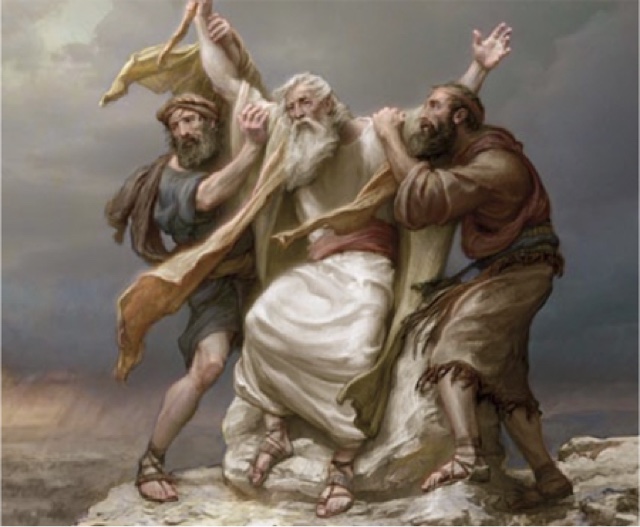
The Amalekites first attacked the Israelites after they had crossed the Red Sea. This was the battle in which Moses was holding the rod. As long as the rod was held high, the Israelites prevailed. But as soon as the rod began to fall because Moses grew tired, the Amalekites would start winning. Aaron and Hur stood on each side of Moses so that, in the end, the Israelites under the leadership of Joshua won. This is what God had to say about the Amalekites in Exodus 17:14 HCSB “14 The Lord then said to Moses, “Write this down on a scroll as a reminder and recite it to Joshua: I will completely blot out the memory of Amalek under heaven.”
15 And Moses built an altar and named it, “The Lord Is My Banner.” 16 He said, “Indeed, my hand is lifted up toward the Lord’s throne. The Lord will be at war with Amalek from generation to generation.”
Later on, when Saul was Israel’s first king, he was given a message from God through Samuel to fight against the Amalekites. Saul’s instructions were clear. “You must completely destroy the Amalekites and everything that belongs to them. Don’t let anything live; you must kill all the men and women and all of their children and little babies. You must kill all of their cattle and sheep and all of their camels and donkeys.’” (1 Samuel 15:3 ERV)
You probably remember the rest of this story. Saul did indeed go and fight the Amalekites as God had ordered. He did kill and destroy, but not everyone and not everything. He took their king, Agag, and let him live. King Saul also took possession of the best of the livestock. When confronted by Samuel later, Saul claimed to have disobeyed God’s orders so that offerings could be made with what they confiscated. Samuel reprimands Saul and tells him it is better to be obedient to God than to make sacrifices.
At the end of that story, Samuel kills Agag, the kingdom of Israel is forever divided, and God is sorry that Saul was made king.
There’s a lot of history between the Israelites and the Amalekites. And it’s filled with bloodshed, animosity, and retribution.
Haman took his ancestry to heart and allowed the inherited hatred of the Jews to navigate us to Chapter 9 of Esther.
For nearly eleven months, the enemies of the Jews had been looking forward to this day. They had been given permission to slaughter the Jews. Some of them may have been loyalists to Haman and others may have personally felt animosity towards the Jews. Without a doubt, many of them equipped and prepared themselves to carry out this massacre. But thanks to Mordecai and God’s providence, the Jews have had nearly eight months to prepare their defense against their attackers.
A couple of things worth mentioning regarding their defense tactics.
We are told that the Jews gathered together. They exercised their strength in numbers. Instead of barricading themselves within their homes with the intent of fighting individually and alone, they grouped themselves and shared the responsibility of fighting.
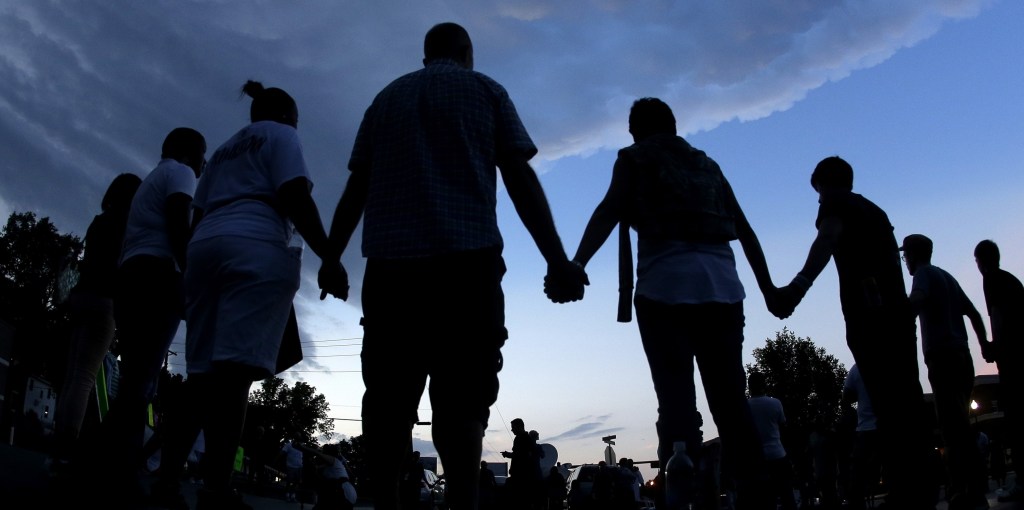
That’s a reasonable response and one which we need to practice. We so often try to go to battle on our own. We don’t hesitate to talk about other people’s burdens and struggles, but we can get a bit secretive when it comes to our own. Big battles are most often won by teamwork; individuals gathered and assembled for a common purpose. We often keep ourselves in bondage because we don’t want to share what we struggle with. There is power in having others on your team, so to speak. Those who will pray for you and fight the enemy alongside you.
Hebrews 10:23 GW “24 We must also consider how to encourage each other to show love and to do good things. 25 We should not stop gathering together with other believers, as some of you are doing. Instead, we must continue to encourage each other even more as we see the day of the Lord coming.”
Another aspect of that is that our lives are not without conflict caused by other people. We most likely have experienced people who disagreed with us, people with whom we’ve had a falling out, those whose personalities didn’t mix well with ours, or people who just didn’t like us for whatever reason. That’s just normal. But “enemy” is a strong word and should be reserved for those who, as the word is defined, as someone who dislikes or hates another person and seeks to harm that person. By the very definition, we most likely don’t have a lot of enemies. However, there is one enemy that we all have in common and that is the devil himself.
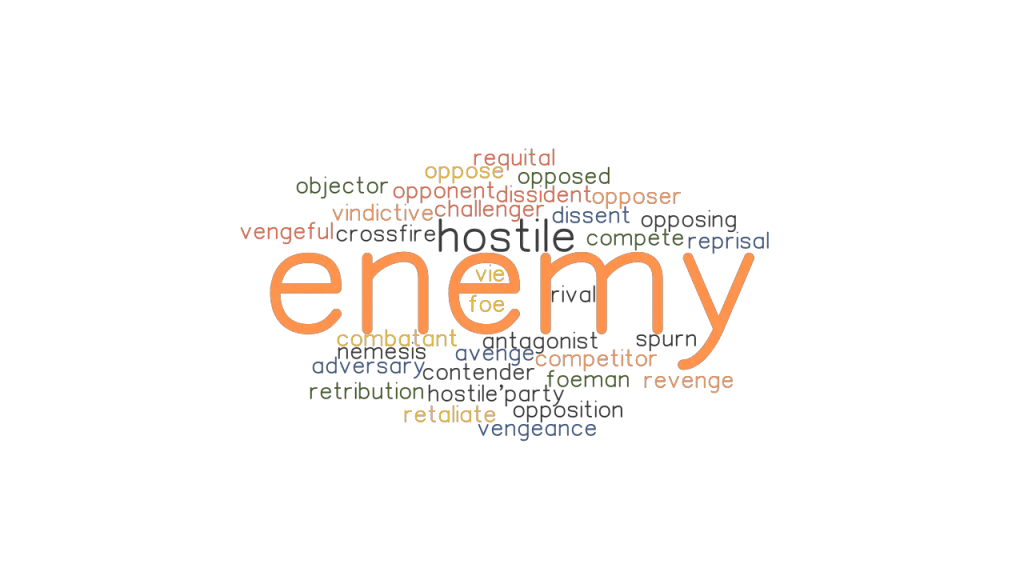
1 Peter 5:8 NIV very clearly identifies the devil as our enemy or adversary. “8 Be alert and of sober mind. Your enemy the devil prowls around like a roaring lion looking for someone to devour.”
So, let’s do a parallel here. The Jews, who are God’s people, were being targeted by their enemies, the Amalekites. We, as Christians, and being God’s children, are targeted by our enemy, the devil. If we all share the same enemy, wouldn’t it make good sense for us to do as the Jews and be united in our defense against our enemy? What would that look like? Praying on behalf of one another. Worshipping and praising God together. Living our own lives in a state of defense and putting on the whole armor of God, not just for our own benefit, but also for the benefit of other believers.
And then there’s the fear factor; the defense mechanism that must be credited to God. Esther 9:2 ISV “2 The Jewish people assembled in their towns throughout the provinces of King Ahasuerus to strike out against those who intended to harm them, and no one could oppose them because all the people had come to fear the Jews.”
This is interesting. Just eleven months ago, the Jews were afraid and confused because an official order had been put in place that called for their death. That order was still in effect and the only tangible thing that has changed is that the Jews are now permitted to defend themselves. They aren’t allowed to attack unprovoked; they can only fight back. And yet, the people had come to fear the Jews. Where did that fear come from?
This wouldn’t be the first or the last time God instilled fear in the enemies of His people.
Rahab said to the two spies sent to Jericho. “I know that the Lord has given you this land and that a great fear of you has fallen on us, so that all who live in this country are melting in fear because of you.” (Joshua 2:9 NIV)
When King Jehoshaphat of Judah went to war against the Moabites and the Ammonites, they too were fearful. 2 Chronicles 20:29 ERV “And the fear of God was on all the kingdoms of the countries, when they heard that the LORD fought against the enemies of Israel.”

Fear was instilled in the enemies of God’s people in order to paralyze or cripple those intending harm. God intentionally caused the adversaries of His people to experience fear. That’s a nifty defense, isn’t it? To have your enemy be fearful of you. But how does that take place?
Warren W. Wiersbe said, “One of the problems with our world today is that ‘there is no fear of God before their eyes’ (Romans 3:18). Like Pharaoh, people are saying, “Who is the Lord, that I should obey His voice!’ (Ex. 5:2) But have they seen anything in the people of God that would make them want to fear the Lord? Is there such devotion to God among God’s people that an outsider attending one of our meetings would fall down on his or her face, worship God, and “report that God is truly among you’ (1 Cor. 14:25? The fear of God protects those who fear God and believe His promises.”[iv]
Do you hear our responsibility in that? We need to have a reverent fear of God and live our lives in such devotion to Him and His Word that others see we cannot be swayed, our morals and beliefs can’t be compromised, and we remain faithful to Him even when it means we won’t be popular or liked or agreed with in all situations.
The Jews were different. They were set apart. They were considered foreigners and because of all of this, they were to be persecuted. But they gathered together and didn’t compromise their faith and trust in God. They held each other up. They formed an alliance with like-minded people and uniformly relied on God to protect them. This is how Christians should be described today. Different. Set apart. Foreigners. Gathered together.
One other important element in this is found in verses 3 & 4. “3 And all the important men of the areas, the governors, captains of the soldiers, and the king’s officers helped the Jews. They helped because they were afraid of Mordecai. 4 Mordecai was very important in the king’s palace. He was famous in all the empire. This was because he was becoming a leader of more and more people.” (Esther 9:3 ICB)
Mordecai who, just a few months ago was stationed outside the king’s gate, is now so respected and so feared that the leaders didn’t just stay neutral in all of this. They helped the Jews. They helped what would have been considered the underdogs in this fight because of their respect for Mordecai.
It was Mordecai’s allegiance to God that spurred this whole event. Recall in Esther 3:2 CSB “ 2 The entire royal staff at the King’s Gate bowed down and paid homage to Haman, because the king had commanded this to be done for him. But Mordecai would not bow down or pay homage. 3 The members of the royal staff at the King’s Gate asked Mordecai, “Why are you disobeying the king’s command?” 4 When they had warned him day after day and he still would not listen to them, they told Haman in order to see if Mordecai’s actions would be tolerated, since he had told them he was a Jew.”
Mordecai demonstrated his faithfulness to God. He doesn’t give an answer, an explanation, or an argument. He simply did what his faith in God told him to do. By this simple act, Mordecai was hated, despised, and threatened. But Mordecai was also delivered, honored, and empowered.
I have to wonder if Mordecai didn’t pray that God would change Haman’s heart or cause Haman to be relocated so that he didn’t have to deal with him. That’s what I would have done. Haman was a thorn in Mordecai’s side and even though Haman was dead, Mordecai was still left with a major problem that called for what only God could do.
“God will not protect you from anything that will make you more like Jesus.”
Elisabeth Elliot
Mordecai, Esther, and the Jews had been refined. God was using these threats and the circumstances to cause them to rely on Him. And when they did, God turned the tables on their enemies.
Esther 9:5 ERV “5 The Jews defeated all their enemies. They used swords to kill and destroy them. They did what they wanted to the people who hated them. 6 They killed and destroyed 500 men in the capital city of Susa. 7 They also killed these men: Parshandatha, Dalphon, Aspatha, 8 Poratha, Adalia, Aridatha, 9 Parmashta, Arisai, Aridai, and Vaizatha. 10 These men were the ten sons of Haman. Haman son of Hammedatha was the enemy of the Jews. The Jews killed all the men, but they didn’t take anything that belonged to them.”
In just the capital city, 500 men plus the ten sons of Haman were killed by the Jews on this one day. This means that more than 500 Persian men went after the Jews because, remember, the Jews could only act in defense, not offense.
During the day, King Xerxes gets a report as to how many have been killed. He shares the information with Queen Esther and says, “What do you want done in the other provinces? Just let me and I’ll take care of it.”
Esther’s response is a little difficult to understand.
She asks that the Jews be allowed to do the same thing the very next day. Any thoughts on why she asked for a second day?
Pulpit’s commentary on this gives us a way out of explaining it. “Esther’s request for a second day of slaughter has a bloodthirsty appearance; but, without a more complete knowledge of the facts than we possess, we cannot say that it was unjustifiable.”[v]
There is one little slight inference that the second day was a way of expanding the territory. In verse 6, it’s specified that 500 men were killed in the capital city or the citadel of Susa. Esther asks that Jews in Susa be permitted to carry out the same edict on the second day. The fact that the capital city or the citadel isn’t mentioned, it implies that the threat to the Jews was still a reality outside the city limits.
And apparently, it was. Because in verse 15 we are told, “ 15 The Jews in Susa came together on the fourteenth day of the month of Adar, and they put to death in Susa three hundred men, but they did not lay their hands on the plunder.” (Esther 9:15 NIV)
After two days of defending themselves, 800 enemies were killed and the dead bodies of Haman’s ten sons were put on display.

“16 Meanwhile, the remainder of the Jews who were in the king’s provinces also assembled to protect themselves and get relief from their enemies. They killed seventy-five thousand of them but did not lay their hands on the plunder. 17 This happened on the thirteenth day of the month of Adar, and on the fourteenth they rested and made it a day of feasting and joy.
18 The Jews in Susa, however, had assembled on the thirteenth and fourteenth, and then on the fifteenth they rested and made it a day of feasting and joy.
19 That is why rural Jews—those living in villages—observe the fourteenth of the month of Adar as a day of joy and feasting, a day for giving presents to each other.” (Esther 9:16 NIV)
After two days of battle, more than 75,800 enemies of the Jews had been killed. The fact that “more than seventy-five-thousand people were prepared to slaughter defenseless Jews shows many of the king’s people hated God’s people. And the fact that these people were even willing to attack when they knew the Jews would protect themselves is proof that anti-Semitism was very strong throughout the empire.”[vi]
God’s people were being attacked simply because they were God’s people.
Three times in this chapter we are told the Jews did not take anything that belonged to their attackers. They did not lay a hand on the plunder. Why wouldn’t they? If Mordecai’s law permitted them to do so, why wouldn’t they have taken advantage of that allowance?
Maybe they didn’t want to have their motives questioned. If they had killed an attacker and seized their belongings, it could be interpreted as profiting from the slaughter. And, in a sense, I think this would have been distasteful.
But we must also remember the history of these people and ponder the ironic set of circumstances.
King Saul (a Jew) was told to kill the Amalekites (Gentiles) – all of them – and to destroy everything. King Saul was mostly obedient but not completely, therefore it should be said that Saul was disobedient to God’s instructions. He kept the most powerful person (King Agag) and he plundered the best of the livestock from the Amalekites. As a result, God is very much displeased, the Jewish kingdom is divided, and the Jews are eventually taken captive.
Like Mordecai’s obedience to God had prompted this 13th day of the Adar massacre, it was Saul’s disobedience to God that had put the Jews in this position in the first place! Fortunately, the Jews wanted to avoid any sense of disobedience or impropriety and they walked away from any profit that could have been acquired. Just because they could didn’t mean they should.
The same is true for us. Just because the world says we can doesn’t mean that God says we should.
This was a Holy war between God and those that despised God’s people. God, even though He is never mentioned in this book, is the One who gave victory to the Jews on those two days. God is the One who intervened and blanketed the enemies with a fear of the Jews. God is the One who gathered His children as a united force and God is the One who turned the tables on the enemy.
God still does this today.
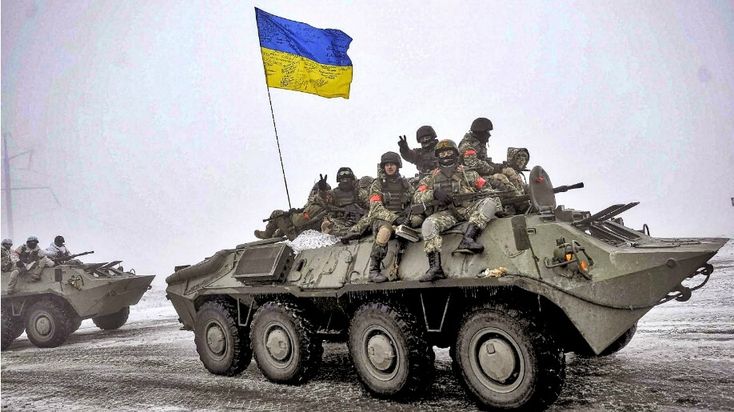
We here in the United States forget that our part of the world is so unlike others. The war in Ukraine is still going on. There is a Christian group called Intercessors for Ukraine. A quote in an article sums up their faith. “Believers of Ukraine are standing in the gap for their land praying. Christians believe that Goliath, who rose from Russia, will be overthrown by the Ukrainian David, who trusts in God.”[vii]
Two of the leaders of this group were interviewed and they shared stories of God turning the tables. In closing, I’ll share my favorite of the stories.
“One of the members of Vitaly’s church serves in the military. He called his parents from the front line to tell them that military intelligence had warned of large drop of Russian paratroopers near where he was stationed. They were told, “Expect it.” He called to ask his parents to pray and get others to pray, which they did.
This is what he saw with his own eyes. The Russian planes flew overhead and he saw the paratroopers drop from the planes in the sky. “God sent a strong wind,” Vitaly told us. They watched as the wind pushed the Russian paratroopers back over the line into Russian territory!”[viii]
People united in prayer and God turned the tables with a gust of air!
[i] Backgammon Basics: How To Play | U.S. Backgammon Federation (usbgf.org)
[ii] Theidioms.com
[iii] Turn the tables Definition & Meaning | Dictionary.com
[iv] Be Committed by Warren W. Wiersbe
[v] https://biblehub.com/commentaries/esther/9-13.htm/Pulpit
[vi] Be Committed by Warren W. Wiersbe
[vii] Intercessors for Ukraine: ‘The War in Ukraine Is Not Inevitable’ – Intercessors for America (ifapray.org)
[viii] Miracles in Ukraine Prove God Is Real: The Church in Wartime – Intercessors for America (ifapray.org)
 Beacons of Light
Always so good!
LikeLike