
We are in a series titled Alive & Connected.
So far in this series we have discussed the importance of gathering and belonging, our beliefs, church membership, baptism, The Lord’s Supper, and prayer.
Today’s focus is on abiding. What does it mean to abide?
Abide, by definition, means to remain, continue, stay. Abide also means alive and connected.
In John 15, Jesus uses a vine and its branches to illustrate abiding. Vineyards and grape vines were plentiful at that time and so His listeners would have been familiar with a grapevine analogy. Just as we can identify with the quote by T.D. Jakes. “We are a microwave generation serving a Crock-Pot God. ” — T.D. Jakes We get that. We can relate to that because we all use microwaves and crock pots and know how they work. Likewise, His disciples would have been able to comprehend what He was saying when it came to the vines and branches.
Let’s get an understanding of the setting in which this conversation takes place. Jesus and His disciples had been in the Upper Room. They had partaken in their last supper with Him during which He revealed the betrayal of Judas and predicted the denials that Peter would give. He washed their feet, had gave them a new commandment which was to love one another. He told them He would be leaving them soon and promised the presence of the Holy Spirit. In other words, Jesus is getting His house in order. He knows that His physical, human presence with them is limited and He’s wrapping things up and giving them a crash course, so to speak. He’s emphasizing what is most important. At the end of chapter 14, Jesus tells His disciples to leave the Upper Room and go with Him. If we were to read chapters 15 through 18, we can almost imagine Jesus and His disciples taking a walk while Jesus speaks to them. Most of chapters 15 through 17 are red-lettered. And then in chapter 18, they end up in the Garden of Gethsemane. This is where Judas carries out his betrayal and Jesus is arrested.
You can almost feel His urgency for the disciples to grasp what He’s saying to them. And one of the critical points He makes is this: abide in Him. It’s as if He is stressing to them that even though He won’t be with them physically, they need to remain close to Him spiritually. That’s a lot easier for us to comprehend because we know what took place. But certainly, for the disciples, this would have been a bit confusing. Jesus is leaving them, but He instructs them to abide in Him. But Jesus knows that if the disciples will abide, remain, continue, and stay with Him, all the other instructions and commandments that He has given them will be automatically fulfilled.
John 15:1 GNT “I am the real vine, and my Father is the gardener. 2 He breaks off every branch in me that does not bear fruit, and he prunes every branch that does bear fruit so that it will be clean and bear more fruit. 3 You have been made clean already by the teaching I have given you. 4 Remain united to me, and I will remain united to you. A branch cannot bear fruit by itself; it can do so only if it remains in the vine. In the same way, you cannot bear fruit unless you remain in me.”
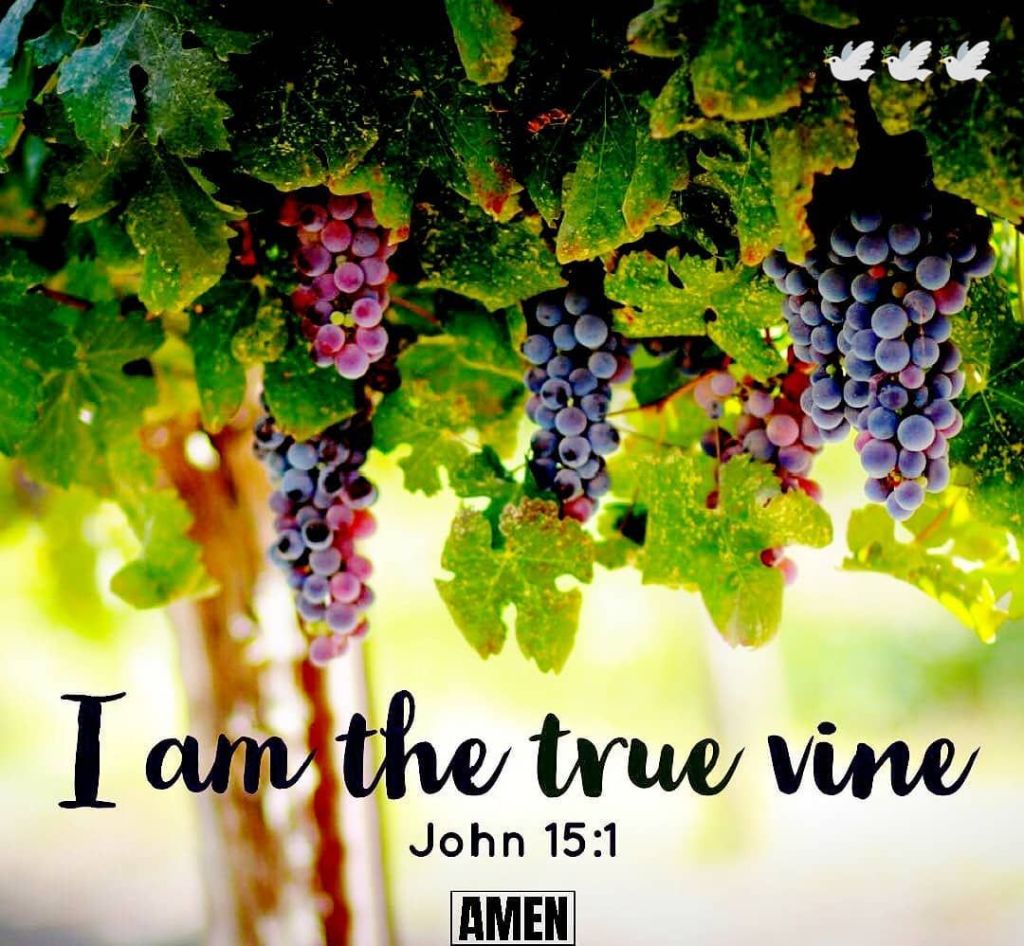
Jesus starts off by identifying Himself as the genuine vine or the true vine. That’s because Israel was often referred to as the vine in the Old Testament. Hosea 10:1 NET “Israel was a fertile vine that yielded fruit.”
Isaiah 5:7 CVE “I am the LORD All-Powerful! Israel is the vineyard, and Judah is the garden I tended with care. I had hoped for honesty and for justice, but dishonesty and cries for mercy were all I found.”
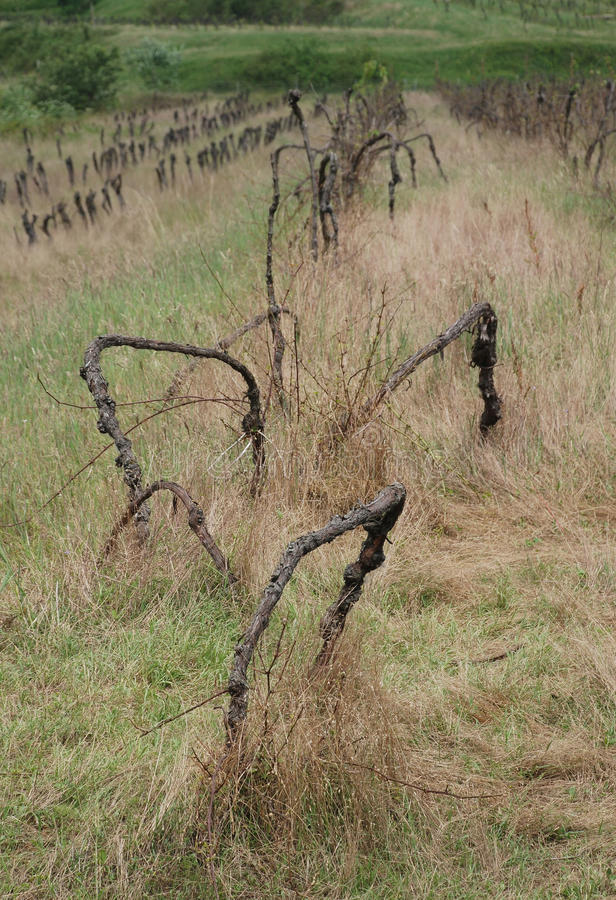
Israel had been planted, cared for, and nurtured by God to produce healthy fruit. But instead, Israel disappointed God. They betrayed Him by their self-reliance and their worship of pagan gods. They let God down and they didn’t allow themselves to be used by Him. What little fruit they produced wasn’t good. It wasn’t what God intended.
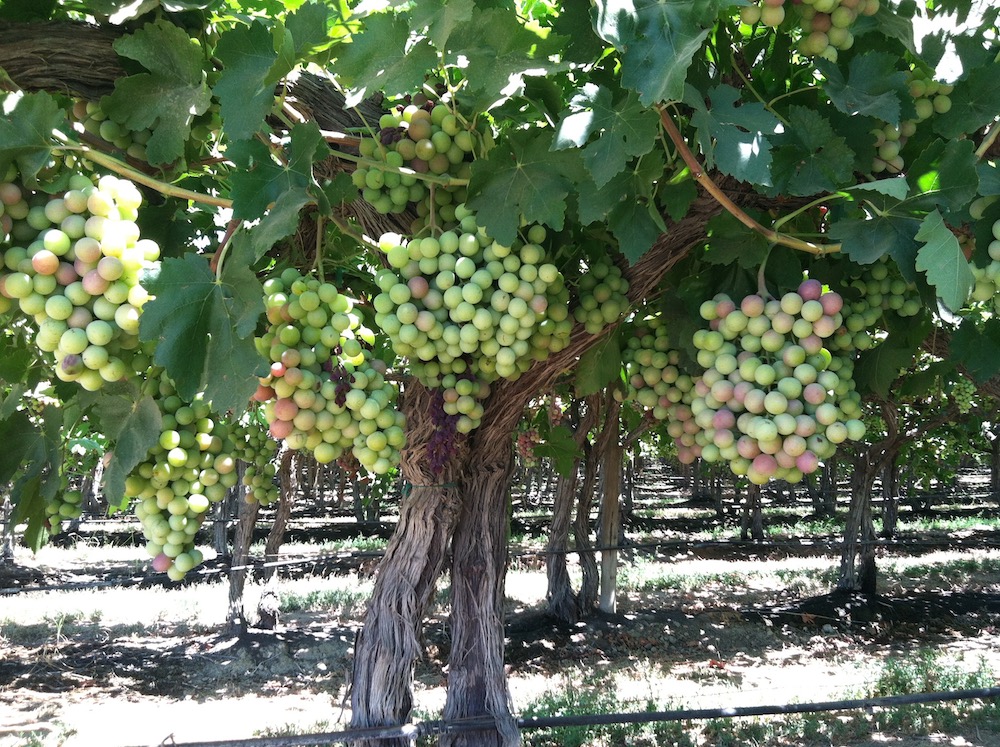
Jesus comes and is established as the one true vine. The vine that won’t be compromised. The vine that is everlasting. And the vine that is required to bear fruit. Jesus is critical. He’s the way, the truth, and the life. He is our only connection to God.
God is identified as the gardener. He’s the one Who takes on the responsibility of planting, watering, pruning, and cleaning the vine and the branches.
Who is assumed to be the branches? We are. In these verses, there are two types of branches referenced. Those that bear fruit and those that don’t.
The branches that don’t bear fruit are cut away. The branches that produce fruit are pruned. Notice that both types of branches go under the knife, so to speak. Neither type of branch is left untouched by the gardener. The gardener doesn’t look at a fruit-bearing branch and say, “Oh, that one’s doing just fine. I’m going to leave it alone forever.” No! Because even healthy, fruit-producing branches need pruning or refining. Both types of branches are, at one time, connected to the same vine. They are fed by the same vine, and receive the same nutrients. But one kind bears fruit; the other kind doesn’t.

Let’s look at the components of the vine. There are the roots from which the vine receives its nourishment and strength. The vine is central. It’s what connects the branches to the roots. There is a nutrient-rich sap that runs through the vine and the branches. In fact, grapevines are known to bleed or cry when they are pruned because the sap is so plentiful. The grapevine sap is thought to have medical benefits. “Grapevine sap has come to the attention of modern medicine after it became known that it could cure eyesores, acne, bowel upsets and prevent open wounds from getting infected. Recent research into the properties and health benefits of grapevine sap has come to some surprising results: it appears that grapevine sap, the clear, watery liquid dripping from freshly pruned grape vines has amazing antimicrobial, anti-inflammatory, and astringent properties. Even more, grapevine sap contains viniferine, a potent natural substance which can restore radiance to one’s skin.” Lastly is the fruit itself. The grapes. Grapes can be eaten as grapes, they can be pressed into juice or wine. They can be transformed into jams and jellies. They can be dried out and they’ll become raisins. Grapes are very much a multi-purpose fruit.
So, let’s parallel this. The roots represent God who nourishes and gives strength to the vine. We know from Scripture that Jesus is the vine, and we are the branches. Who represents the grapevine sap? The Holy Spirit, of course. And I love how the grapevine sap is known for curing and astringent properties. And it even restores a natural radiance. Doesn’t that sound just like the Holy Spirit? Now the fruit.
What kind of fruit is Jesus referring to? Obviously, the one who may be a little slow to catch on to the analogy would think grapes. But what kind of fruit is Jesus really implying?
Fruits of the Spirit, right? Those godly characteristics should be evident in our lives.
Verse 4 of John 15 instructs us to abide or remain with Him and, as a result, He will remain or abide with us. So, the question becomes, how do we realistically abide in Him? It’s not as easy as it sounds. We’re restless creatures who like to be in the know and be in control. We don’t like surprises or unexpected hiccups in life. We don’t like to let go and let God when we think we can handle something either on our own or better than God,-.
Beth Moore, in her book Chasing Vines, said this. “The job of the branch is to abide. Fruit is assured to every branch that fulfills its singular task: abide in the Vine. ‘Easy,’ we say, and we then spend a lifetime relapsing into autonomy and then repenting, relearning what it means to abide. In one sense, abiding sounds like the easiest command for a Jesus follower to undertake. It means resting in the One who is stronger than we are, wiser than we are, and more powerful than we are – and who loves us and defends us. But for most of us, the not-doing is infinitely more difficult than the doing. Give us a to-do- list or a deadline or an assignment, but for the love, please don’t ask us to let go and be still.”
Is it difficult for you to abide in Jesus? Do you find that ultimately life is more difficult if you don’t abide in Him? It should be. We were created and saved by God to have an intimate and daily relationship with Him. God doesn’t want to be in a long-distance relationship with us. We weren’t designed for that. We were created to have a close-knit family tie with Him. 1 John 3:1 GNT “3 See how much the Father has loved us! His love is so great that we are called God’s children—and so, in fact, we are.” Likewise, we are the bride of Christ, and we are brothers and sisters with other children of God. Abiding in Him keeps us connected to Him and to other believers and as a result, we are family and help one another to bear fruit. Billy Graham once said, “Amazing things happen when the family of God bands together.”
God doesn’t want to be in a long-distance relationship with us.
John 15:5 HCSB “5 “I am the vine; you are the branches. The one who remains in Me and I in him produces much fruit because you can do nothing without Me. 6 If anyone does not remain in Me, he is thrown aside like a branch and he withers. They gather them, throw them into the fire, and they are burned. 7 If you remain in Me and My words remain in you, ask whatever you want and it will be done for you. 8 My Father is glorified by this: that you produce much fruit and prove to be My disciples.”
Jesus rephrases what He has just said and He’s emphasizing the abidance that is required of us to produce fruit. His assurance of the cause and effect of this is clear. If we remain in Him and He in us, fruit is produced; there will be a harvest. If we don’t remain in Him then we are fruitless and become like a useless twig. Because, without Him, WE CAN DO NOTHING!
Interestingly, grapewood has few uses outside of growing fruit. It can be dried and used for crafts. It can be used in aquariums as a decorative item. It is often used as kindling. Grape wood is very soft and pliable. It can be twisted and manipulated. As a matter of fact, the original word used for grapevine in the Bible means “to bend or curl”.[i] You can’t build with it. There are limited uses for grape wood when it has been removed from the vine. It’s no coincidence that Jesus tells us that apart from Him, we can do nothing.
Take a deeper look at our verses so far. Verse 2 of John 15 CSB “and he prunes every branch that produces fruit so that it will produce more fruit.” Now look at verse 5. “The one who remains in me and I in him produces much fruit.” You can see the progression from just fruit to more fruit to much fruit. For that to happen, we must abide and we must be pruned for us to mature and grow.

“Finally, we are called, as part of the abiding process, to submit to the pruning knife of God in the providences by which He cuts away all disloyalty and sometimes all that is unimportant, so that we might remain in Christ all the more wholeheartedly.”[ii]
Pruning, by definition, means “trim (a tree, shrub, or bush) by cutting away dead or overgrown branches or stems, especially to increase fruitfulness and growth” “The practice entails the targeted removal of diseased, damaged, dead, non-productive, structurally unsound, or otherwise unwanted {plant} material.”[iii] You see, God has to prune us to rid us of those things that are diseased, damaged, dead, non-productive, structurally unsound, or otherwise unwanted by Him. He does that through the Holy Spirit who convicts us when we sin, reminds us of God’s Word, and guides us in our decisions and what we say and think. By being pruned, we will not be satisfied with just being connected to Jesus, the true vine. We must be willing to have those unwanted, unproductive, and unhealthy portions of us cut off and destroyed.
Fruitful Christians are faithful Christians. They are also faithful witnesses and bold proclaimers.[iv]
Romans 11:16b ICB tells us “If the roots of a tree are holy, then the tree’s branches are holy too.” And Romans 11:18b ICB should humble us because “You do not give life to the root. The root gives life to you.”
God desires us to be His children, extensions of His vine, and ambassadors for Christ. And, as a result, we rely on the roots of God, the vine of Jesus, and the sap of the Holy Spirit.
John 15:9 CSB “9 “As the Father has loved me, I have also loved you. Remain in my love. 10 If you keep my commands you will remain in my love, just as I have kept my Father’s commands and remain in his love.
11 “I have told you these things so that my joy may be in you and your joy may be complete.
12 “This is my command: Love one another as I have loved you. 13 No one has greater love than this: to lay down his life for his friends. 14 You are my friends if you do what I command you. 15 I do not call you servants anymore, because a servant doesn’t know what his master is doing. I have called you friends, because I have made known to you everything I have heard from my Father. 16 You did not choose me, but I chose you. I appointed you to go and produce fruit and that your fruit should remain, so that whatever you ask the Father in my name, he will give you.
17 “This is what I command you: Love one another.”
Easy question – what does Jesus command us to do? Love each other as He loves us. What do we learn from these verses about finding true joy? Abiding in Him and His love for us results in us keeping His commands, and the final result is complete joy.
Jesus tells us that we are His friends if we do what He commands. He also tells us that He chose us and our purpose is to produce fruit. And what is the first fruit of the Spirit listed? Love. The new commandment He gives is that we love one another as He loves us. Easier said than done, right?
But if we are abiding in Him, we are receiving the power of the Holy Spirit much like a branch on a grapevine receives its sap, moisture, and nutrients that come up from the roots to the vine. That flow of the Holy Spirit is what empowers and enables us to love one another. Then through loving one another, we can forgive and be at peace with one another, experience joy with one another, practice patience with one another, be kind and good, and gentle with one another, remain faithful to one another, and exercise self-control with one another.
There’s an old song titled We Are One in the Spirit. The lyrics are:
We Are One In The Spirit
We Are One In The Lord (2)
And We Pray That All Unity
May One Day Be Restored
And They’ll Know We Are
Christians By Our Love, By Our Love;
Yes, They’ll Know We Are Christians
By Our Love!
We Will Walk With Each Other
We Will Walk Hand In Hand (2)
And Together We Will Spread The News,
That God Is In Our Land
And They’ll Know We Are
Christians By Our Love, By Our Love;
Yes, They’ll Know We Are Christians
By Our Love!
We Will Work With Each Other
We Will Work Side By Side (2)
And We’ll Guard Each Man’s Dignity,
And Save Each Man’s Pride.
And They’ll Know We Are
Christians By Our Love, By Our Love;
Yes, They’ll Know We Are Christians
By Our Love![v]
The song was written by a Catholic priest back in the 1960s and was based on John 13:35 NIV “35 By this everyone will know that you are my disciples, if you love one another.”
Can people tell you’re His disciple just by how you love others? Not just the loveable but also the unlovable. The ones who hurt you, the ones who aren’t pleasant to be around, the ones who have betrayed you or mistreated you, the ones who claim to be Christians themselves but don’t act like it, the selfish ones, the ones who, quite frankly, don’t deserve to be loved. Yeah, those people. Do you love them?
A professor of theology, Cynthia Rigby said this about the song “We Are One in the Spirit”. “What sense can we make of this moment, as a moment of discipleship? What are we being called upon to do and to be right now, today? For it is right now – today – that the Messiah asks us to join him in doing power differently, in hoping against hope, and in holding nothing back for the sake of those whom God so loves …. Will we join in what God is up to, or will we just get in the way? (Rigby, 299)”[vi]
If we choose to join God and be part of His productive family, then we will abide in Him, willingly accept the pruning hand of God and we will joyously bear good fruit. Those who just get in His way and don’t produce fruit will be cut off.
So let me post a question to you. What kind of branch are you? Are you bearing fruit? Are you being pruned? If not, what changes can you make in your life today?

[i] The History of the Grape-Vine in the Holy Land on JSTOR
[ii] What Does It Mean to “Abide” in Christ? (ligonier.org)
[iv] Credit to Andy Cauble
[v] We Are One In The Spirit Song Lyrics | Divine Hymns | Song Lyrics
[vi] Discipleship Ministries | History of Hymns: ‘They’ll Know We Are… (umcdiscipleship.org)
 Beacons of Light