The next church to be addressed is the church at Sardis.
If you’re keeping up, we’ve covered the careless church (Ephesus), the crowned church (Smyrna), the compromising church (Pergamos), and the corrupted church (Thyatira).
Today’s church is known as the feeble church.
Feeble means lacking physical strength. But it can also mean lacking spiritual strength, as was the case at Sardis. At the time when John wrote Revelation, the city of Sardis was living on its reputation. They were still considered a trade center and were “known for its manufacture of woolen garments”[i], but the city lacked the luster and splendor that it had once held. It was living back in its “glory days” when the city and the church were both thriving and growing.

Out of the seven churches named in Revelation, Sardis was one of the oldest cities in Asia Minor. It had once been the capital city and had been known for its wealth and its strategic location. It sat up above a river valley, surrounded by mountain cliffs making it seem as if it were immune from enemy attacks.
But that wasn’t true. Their overconfidence in thinking that the cliffs were too hard for others to climb resulted in the city of Sardis being taken over by the Persians. The Persians didn’t consider the fact that if they were able to invade, then others might be able to do the same. A mountain climber from Crete was able to enter from an unguarded area, open the city gates, and welcome the Cretan army right on in. Later on, Sardis came under the control of the Romans.
The city had been invaded twice, but the church there had also been invaded.
“The main religion in the city was the worship of Artemis, one of the ‘nature cults’ that built on the idea of death and rebirth.”[ii] Here is Jesus’ message to the congregation at Sardis.
Revelation 3:1 NIV “To the angel of the church in Sardis write:
These are the words of him who holds the seven spirits of God and the seven stars.”
Each church was given a salutation that was specifically pertinent to the condition of the church at that time. For example, last week the church at Thyatira was addressed by “the Son of God, whose eyes are like blazing fire and whose feet are like burnished bronze.” (Revelation 2:18b NIV) This particular description addressed the worship of the sun as well as Jesus’ ability to see clearly and judge appropriately.
To the church at Sardis, Jesus is the One who holds the seven spirits of God and the seven stars.

The seven stars we are told in Revelation 1:20 represent the angels, messengers, or pastors of the seven churches addressed in Revelation chapters 2 & 3. The fact that Jesus is holding them in His hand indicates His authority over them. The seven spirits of God were referenced in Revelation 1 and we’ll see them again in Revelation 4. We know that there is only one Holy Spirit (Ephesians 4:4), “but the number seven demonstrates fullness and completeness.”ii
It’s believed that the reference to the seven spirits of God is taken from Isaiah 11:2 and relates to the multifaceted nature and roles of the Holy Spirit. These would be:
1. The Spirit of Wisdom
2. The Spirit of the Lord
3. The Spirit of Understanding
4. The Spirit of Counsel
5. The Spirit of Power
6. The Spirit of Knowledge
7. The Spirit of the Fear of the Lord[iii]
The significance here to the church at Sardis is that “Christ would have the church in Sardis know that He desires to control His Church by the effective work of the Holy Spirit.”i We know that we can ignore, block, and grieve the Holy Spirit. Some of the ways in which we do this, consciously and unconsciously are unadmitted sin and suppressing His nudges. We can become resistant and deaf to what the Holy Spirit tells us. Most likely, we’ve had experience in this. We may hear the Holy Spirit tells us to forgive someone and we just pretend as if we didn’t hear that. Or maybe the Holy Spirit prompts us to call someone and check on them and we’ll decide to do it later when we have more time.

But one of the biggest ways we fail to surrender to the Holy Spirit is just simply going through the motions or routines in life and not engaging with God’s Spirit. We’ve talked before about checking off the boxes.
Went to church. Check.
Read my Bible. Check.
Said my morning prayer. Check.
Prayed over my meals. Check.
Said my evening prayer. Check.
Went through the day without committing any blatant sins like lying or stealing. Check.
When our lives become robotic and all that we do is routine, we can become stagnant in our faith; when there is no growth, no refining, and no changes taking place. Know this: the Holy Spirit does not want you to be stagnant. The Holy Spirit encourages growth even in quiet periods.
How many churches (or individuals) see Jesus as their Savior, but He is far from being their Lord? If Jesus is Lord, there will be sacrifices, there will be challenges, there will be obedience, but there will be joy. Too many churches are “playing church”. They have all of the components. A place to meet, a pastor or leader, songs, a message, prayers, and activities, but they’ve neglected to include the Holy Spirit. Some people are “playing Christian”. They’re busy doing a lot of Christian things. Going to church, carrying a Bible, saying prayers, listening to Christian music, and maybe even being involved in a Bible study. But they are disengaged from the Holy Spirit.
Many of the people in Sardis were living their lives much like this.
Revelation 3:1b NIV “I know your deeds; you have a reputation of being alive, but you are dead. 2 Wake up! Strengthen what remains and is about to die, for I have found your deeds unfinished in the sight of my God. 3 Remember, therefore, what you have received and heard; hold it fast, and repent. But if you do not wake up, I will come like a thief, and you will not know at what time I will come to you.”

Just like the other churches, Jesus knows their deeds. But did you notice there is no mention of their faith, labor, suffering, or love? So, what positive things does Jesus recognize? Nothing! Jesus has no words of praise for them. There’s no mention of persecution. He doesn’t bring up pagan influences that have made their way into their congregation. In fact, the Lord doesn’t “point out any doctrinal problems that required correction.”ii What He does say is that they are coasting on their past reputation thinking that is sufficient. At one time, their church was alive and flourishing, but those days are long gone. What once was like a flowing river is now more like a stagnant puddle.

Jesus tells them they think they’re alive, but they are, in fact, dead. Imagine their surprise! It’s very similar to the message Jesus gave to the religious leaders. Matthew 23:27-28 NIV “27 “Woe to you, teachers of the law and Pharisees, you hypocrites! You are like whitewashed tombs, which look beautiful on the outside but on the inside are full of the bones of the dead and everything unclean. 28 In the same way, on the outside you appear to people as righteous but on the inside you are full of hypocrisy and wickedness.”
The people in Sardis were sitting comfortably in their reputation. But their reputation was with man, not with God. Jesus warns them to wake up! Why would that have been meaningful to this particular church? Because this was a congregation in a city that had thought they were resistant to an attack, and yet, twice, they found themselves invaded by an enemy.
When we become complacent, routine, and automated, we fall into a spiritual sleep. When we are no longer facing challenges and when we find ourselves comfortable, there is no friction. “No friction usually means no motion!”ii No motion usually means no activity and no activity usually means no threat to the enemy. This is what the church at Sardis had become. “They were decent people with a dying witness and a decaying ministry. The unsaved in Sardis saw the church as a respectable group of people who were neither dangerous nor desirable.”ii They were nothing more than a country club posing as a church. “When the Great Physician felt their pulse He pronounced them dead.”i
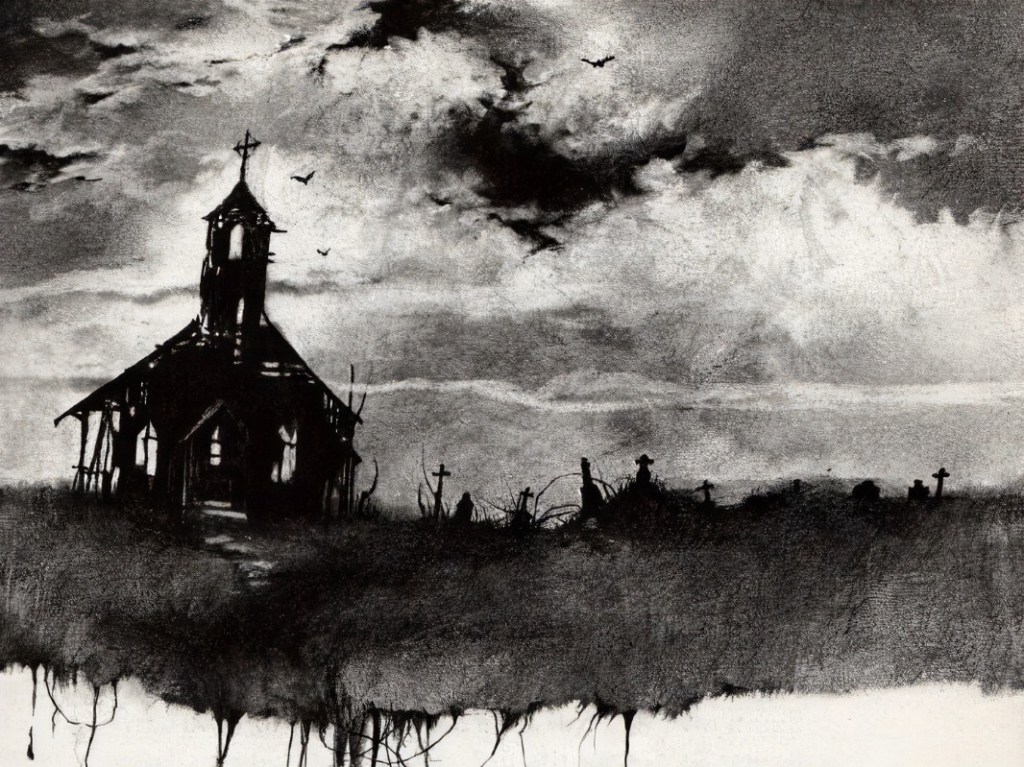
Jesus states that their deeds have been left unfinished. Other translations use the words incomplete, unfulfilled, imperfect, or not meeting the requirements. To sum it up, they weren’t “carrying out God’s purpose for their existence.”i The people took it for granted that it was acceptable to just exist and go through their routines. They were comfortable and content. They were self-satisfied and self-approving. They had become complacent. Proverbs 1:32 NLT warns us. “Fools are destroyed by their own complacency.”
Does that sting? It sure does for me. We are (I am) really good at giving the appearance of growing and maturing in our walk with God, but our hearts and our minds are stagnant puddles in the eyes of God. Isaiah 29:13 GNT “The Lord said, “These people claim to worship me, but their words are meaningless, and their hearts are somewhere else. Their religion is nothing but human rules and traditions, which they have simply memorized.”
Jesus tells them to wake up and be watchful! “The first step toward renewal in a dying church is honest awareness that something is wrong.”ii The same applies to individuals because remember, the admonitions and encouragements given in these letters to the churches are really to the individual people. If there are individuals who are spiritually asleep, then the church is in danger of being spiritually asleep.

Look at verse 3. What’s the challenge Jesus gives them? Revelation 3:3 ERV “So don’t forget what you have received and heard. Obey it. Change your hearts and lives! You must wake up, or I will come to you and surprise you like a thief. You will not know when I will come.”
Jesus implores them to think back on the truth that was given to them in the beginning. This is likely a reference to the Holy Spirit. We know that upon salvation we receive the Holy Spirit. (Acts 2:38) Scripture tells us that the Holy Spirit speaks to us to guide us. (John 16:12-14) Jesus advises the members of Sardis to obey the Holy Spirit and repent!

What are the consequences if they don’t? “He would come as a thief when they least expected Him, and this would mean judgment.”ii Jesus uses the imagery of a thief. Most of us have alarm systems in our homes. We have those primarily to scare off would-be thieves. Those alarms only work if we activate them. Some people only set the alarm if they’re going out of town. Some only set the alarm at night before going to bed. If we heard that houses in our neighborhood were being broken into, most likely we’d be more proactive about setting the alarm at all times. We’d be more alert, and more observant of any threat. Jesus is using this warning to motivate the people and the church to repent and to make changes.
Tony Evans said “Jesus warned that he was coming in judgment. But as he does repeatedly with his people, he gave the church in Sardis an opportunity to repent.”[iv] That is often God’s method of operation, isn’t it? He chastises us when we fail to obey and counsels us to repent. But if we remain stubborn and neglect to submit to the Holy Spirit, God loves us too much to not get our attention. Circumstances can change and consequences can enter in the blink of an eye. And while this can be painful, uncomfortable, and sometimes unbearable, we know that God disciplines those He loves. (Hebrews 12:6) But some of us just don’t get it. We get caught up in a loop of not engaging with the Holy Spirit, not repenting, not making changes, and becoming more complacent and more stubborn. But be warned.
But if we remain stubborn and neglect to submit to the Holy Spirit, God loves us too much to not get our attention.
Proverbs 29:1 GNT “If you get more stubborn every time you are corrected, one day you will be crushed and never recover.”
But amid this feeble and dead church, Jesus acknowledges a few who have remained faithful.
Revelation 3:4 NIV “4 Yet you have a few people in Sardis who have not soiled their clothes. They will walk with me, dressed in white, for they are worthy. 5 The one who is victorious will, like them, be dressed in white.”
Remember Sardis was a city known for manufacturing wool garments. Clothing and garments would have been a topic of familiarity with them. “Clothing in the Bible represents various aspects of human nature and redemption, with white garments symbolizing purity and righteousness, and filthy rags symbolizing our sinful nature and the need for redemption.”[v] In this particular case, the reference to the soiled clothing is a metaphor. What Jesus is saying is “What garments are to the body, so habits are to the real self.” Many of the people there were soiled with sinfulness and indifference.
Fortunately, there’s a remnant of people who have escaped the spiritual sleep and the decline into complacency. Interestingly, the name Sardis means “escaping”. The few people Jesus refers to have escaped worldly influence and it is through these few that there is hope. Jesus calls them “worthy” and states that whoever becomes like them will be dressed in white, or dressed in righteousness. And then a promise is given.
Revelation 3:5b NIV “I will never blot out the name of that person from the book of life, but will acknowledge that name before my Father and his angels. 6 Whoever has ears, let them hear what the Spirit says to the churches.” (Revelation 3:1 NIV)
Jesus mentions the Book of Life. The Book of Life is found throughout the Bible. The first occurrence is in Exodus 32 when the golden calf incident takes place. Exodus 32:32 ESV “But now, if you will forgive their sin—but if not, please blot me out of your book that you have written.” 33 But the Lord said to Moses, “Whoever has sinned against me, I will blot out of my book.”
The book is referenced in both the Old and New Testaments.
Daniel 12:1 ESV “But at that time your people shall be delivered, everyone whose name shall be found written in the book.
Phillippians 4:3 NLT “And I ask you, my true partner, to help these two women, for they worked hard with me in telling others the Good News. They worked along with Clement and the rest of my co-workers, whose names are written in the Book of Life.”
Psalm 69:28 NLT “Erase their names from the Book of Life; don’t let them be counted among the righteous.
From these verses, what do we know? There is a Book of Life. It is God’s book. Names are written in it. Names are blotted out. It’s good to have your name included. It’s bad to have your name blotted out. And from Psalm 69:28 we learn that only the righteous are included in the blook.
Some people use these verses to prove that a person can lose their salvation. Most of the pastors and religious educators that I follow don’t agree with that. Why then are names blotted out?
We’ll eventually get to a reference of the Lamb’s Book later on in Revelation. Revelation 21:27 NIV “27 Nothing impure will ever enter it, nor will anyone who does what is shameful or deceitful, but only those whose names are written in the Lamb’s book of life.”
Some believe that these are two separate books. Let me share Warren W. Wiersbe’s thoughts on this. “If the names of believers (the elect) are written from the foundation of the world, and if God knows all things, why would He enter the name of somebody who would one day fall and have to be removed from the book? We are enrolled in heaven because we have been born again (Hebrew 12:23), and no

As unbelievers die, their names are removed from the book; thus, at the final judgment, the book contains only the names of believers (Rev. 20:12-15). It then becomes ‘the Lamb’s Book of Life’ (Rev. 21:27), because only those saved by the Lord Jesus Christ have their names in it. All the others have been blotted out, something God would never do for any true child of God (see Ex. 32:32; Rom 9:3). It is a book of life, and lost sinners are dead (Eph. 2:1).”ii
Therefore, Jesus’ message to the church at Sardis was to wake up and repent! Stop playing church and stop pretending to be Christ-followers because He knows the truth!
Our application is this. Just as the people in Sardis, we are not immune to becoming complacent and feeble. We can’t continue just going through the motions of pretending to walk the walk and talk the talk without engaging with the Holy Spirit.
“The work of the Spirit is to impart life, to implant hope, to give liberty, to testify of Christ, to guide us into all truth, to teach us all things, to comfort the believer, and to convict the world of sin.” Dwight Lyman Moody
[i] Revelation by Lehman Strauss
[ii] Be Victorious by Warren W. Wiersbe
[iii] 7 Spirits Of God: A Detailed Truth From The Bible (2024) (biblekeeper.com)
[iv]The Tony Evans Bible Commentary
[v] Biblical Analysis Of Fine Linens And Garments: 6 Spiritual Themes — Biblical Pathway
 Beacons of Light