
We find ourselves at church #6 today.
So far, we’ve discussed Ephesus, the careless church, Smyrna, the crowned church, Pergamos, the compromising church Thyatira, the corrupted church, and Sardis, the feeble church.
If we were keeping an overview of pros and cons of each church we’ve discussed so far, it would look a little like this.
| Church | Ephesus | Smyrna | Pergamos | Thyatira | Sardis |
| Pros | + | + | + | + | N/A |
| Cons | – | N/A | – | – | – |
Looking back, you may recall that Jesus had no admonishments for the church at Smyrna. Today we are looking at a church that is very similar to Smyrna. It’s the church in Philadelphia. The meaning of the name Philadelphia is probably familiar to you. It means “brotherly love” which is quite fitting because Philadelphia “had been built with the deliberate intention that it might become a missionary city.”[i]
Philadelphia was the smallest and the youngest of the seven churches. John wrote these letters to the churches around 95 AD. Nearly 80 years prior, in 17 AD, the city of Philadelphia, including the church, was destroyed by a great earthquake. Other cities were affected by the earthquake as well, but Philadelphia suffered from after-shocks for several years. For this reason, many of the residents moved away.
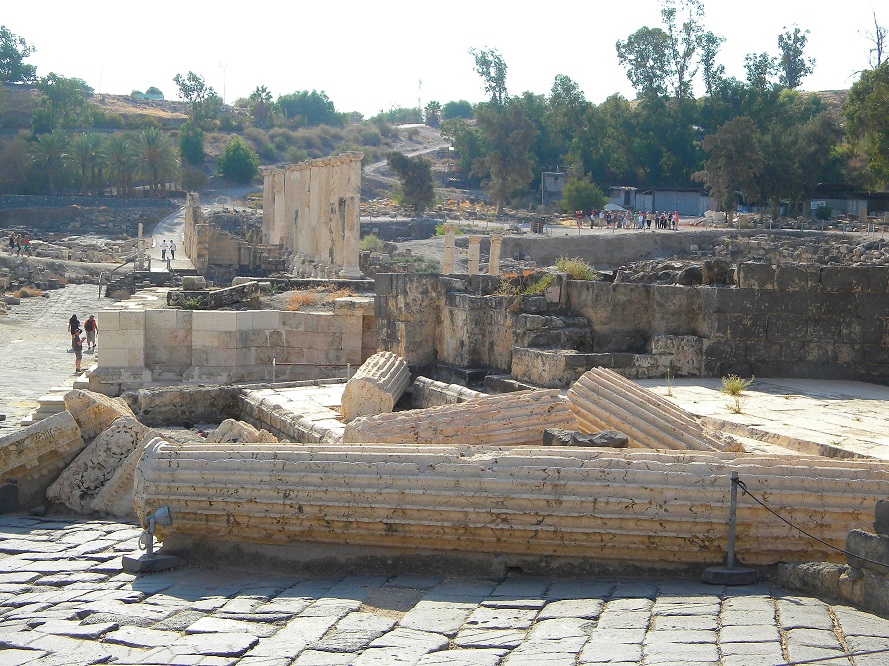
Before the earthquake, Philadelphia was known for its rich agriculture, specifically grapes that were produced into extraordinary wine. During the aftermath of the earthquake, the Roman Emperor at that time, who was Tiberius Ceasar, showed great kindness to the Philadelphians. He relieved them of their tax obligations for five years. As a showing of their gratitude, the Philadelphians agreed to have the name of the city changed to Neocaesarea (New Caesar). Years later, the name would be changed again to Flavia under the rule of Vespasian (Vess-pay-she-un). This name Flavia was a tribute to the Flavian dynasty which was responsible for restoring the cities affected by the great earthquake. So make a mental note that Philadelphia had been renamed to show honor to those who had shown favor towards them.
Philadelphia was a church that had faced severe challenges and struggles. They had been hit hard, structurally, physically, emotionally, and economically. The Philadelphians found themselves needing some brotherly love. And it appeared that brotherly love was being extended to them, but all was not as it seemed. Tiberius Ceasar was a relatively new emperor. He stepped in “to help” but his motive was to help himself. He needed more followers, more supporters than he had. He did them a favor, but it was going to cost their loyalty and devotion to him.
By now, you know the drill. Jesus describes Himself to each church in a way that is significant to that church. The description is an intentional reference to the moral condition of each church. Some examples of this: Ephesus who had lost their first love of Jesus despite staying busy serving Him was addressed by “He who holds the seven stars in His right hand, who walks amid the seven golden lampstands” which is His way of reminding them He has full authority and control over the churches and their leaders. It was His way of telling them, “You need to put Me first. You need to love Me first. Not your pastor.” To Thyatira, the corrupted church, Jesus identifies as “the Son of God, who has eyes like a flame of fire, and His feet like fine brass” which lets them know that He is now known as the Son of God rather than the Son of Man, and He sees all and judges all.
Most of the descriptions used in addressing the churches mirror what Jesus says about Himself or what John sees in Jesus in Revelation 1. In other words, the descriptions Jesus uses in addressing the churches are repetitions of how Jesus was described in the first chapter of Revelation.
Examples: To Ephesus, Jesus is He who holds the seven stars and walks in the seven golden lampstands. (Rev. 2:1). Those same descriptions are found in Revelation 1:12, 16. To Pergamos, Jesus is He who has the sharp two-edged sword. The sword is first mentioned in Revelation 1:16. To the church at Sardis, Jesus is He who has the seven Spirits of God and the seven stars. Again, these are found in Revelation 1:4, 16. What we find different in the letter to the church in Philadelphia is that part of how Jesus identifies Himself is not found in Revelation 1.
Revelation 3:7 HCSB “Write to the angel of the church in Philadelphia: “The Holy One, the True One, the One who has the key of David, who opens and no one will close, and closes and no one opens”.
Jesus is holy and Jesus is true. These characteristics are not used in Revelation 1 which makes this description to Philadelphia unique. So what did Jesus mean by calling Himself The Holy One and the True One to this specific church?
The church at Philadelphia like many others at that time was surrounded by Jews who didn’t believe Jesus was the Messiah, as well as Greeks and Romans who had their own gods, goddesses, and deities. But unlike many of the other churches, the people at Philadelphia had remained faithful and true to Jesus. They were living apart from the paganists around them. They had not allowed pagan influences into their congregation. They were a small group, but a genuine Christ-following group.
Using the descriptions of holy and true, it’s quite possible that Jesus meant this in several ways. First of all, the church at Philadelphia, will be given no criticism nor admonishments from Jesus. He only has positive things to say to them. Jesus sees that His people of Philadelphia strived to be holy and true. The people there had not allowed any other doctrines or beliefs into their fold. They had remained faithful to God’s Word and had not waivered in their devotion and love to Jesus. The people of Philadelphia represent our earthly goal of who to aspire to be.
Secondly, by using the word “holy” Jesus aligns Himself with God. “Jesus Christ is holy in His character, His words, His actions, and His purposes. As the Holy One, He is uniquely set apart from everything else, and nothing can be compared to Him.”[ii]

By using the word “true”, Jesus assures them that He is genuine. “There are two ancient Greek words that we might translate true. One means “true and not false.” The other means “true and not fake.” The ancient Greek word used here for true (alethinos) is the second, with the idea of “real” or “genuine.” Jesus is true in all of who He is; He is the real God and the real man.”[iii]
Jesus also identifies Himself as He who has the key of David, who opens and no one will shut, and who shuts and no one opens. There is a reference to keys in Revelation 1:18. Jesus states that He has the keys of Hades and of Death. In Revelation 3:7, Jesus has the key of David. Are these the same or are they different? I don’t think we can definitively say.

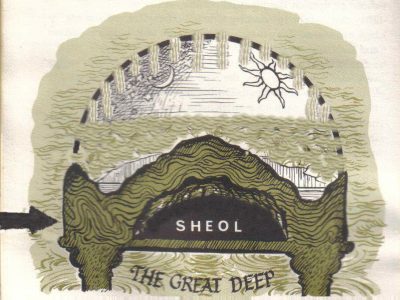
Think about it this way. “Death and Hades were not present in the beginning of the heavens and the earth, because everything God made was good.”[iv] Death only came in as a result of man’s sinfulness. Because death became an imminent part of life, Hades (or Sheol as it’s referred to in the Old Testament) had to come into existence. “In the Old Testament, the Hebrew word “Sheol” is mentioned referring to the grave or the home of the deceased. Sheol was believed to be the dwelling place of the dead before the time of Jesus.”[v] It was thought to be a gloomy, dark pit lacking anything they had known before. Ecclesiastes 9:4 GNT puts it somberly. “4 But anyone who is alive in the world of the living has some hope; a live dog is better off than a dead lion. 5 Yes, the living know they are going to die, but the dead know nothing. They have no further reward; they are completely forgotten. 6 Their loves, their hates, their passions, all died with them. They will never again take part in anything that happens in this world.”
However, before the Old Testament ends, God offers hope for those who have died and are presumably in Sheol or Hades. Daniel, like John, was given visions of prophecy. In Daniel 12:2 CEV “Many of those who lie dead in the ground will rise from death. Some of them will be given eternal life, and others will receive nothing but eternal shame and disgrace.”
We know that eternal life only became possible because of the blood of Jesus Christ. His crucifixion and His subsequent defeat over death three days later gave Jesus all authority and power (aka keys) over Hades and Death.
Romans 6:23 “For the wages of sin is death, but the gift of God is eternal life in Christ Jesus our Lord.” That explains (hopefully) the keys of Hades and Death and how Jesus was given them.
The key of David is only mentioned twice in the Bible. The first occurrence takes place in Isaiah 22. There was an officer in King Hezekiah’s palace at that time by the name of Shebna. Shebna is very self-serving and wicked. Through a prophecy given to Isaiah, Shebna is ousted from his position of authority and exiled far away. Eliakim is put in that position and God gives him the key to the Davidic kingdom. Isaiah 22:22 EASY “22 I will give the key of David’s royal family to him. He will have complete authority. Any door that he opens, nobody may close it. Any door that he closes, nobody may open it.”
By using the scripture from Isaiah 22 in Revelation 3, it’s presumed that Eliakim represents a type of Messiah to Israel at that time and is deemed worthy by God to receive the key of David. Jesus is the true Messiah and of course, is the root as well as the descendant of David, proving to be a rightful owner of the key of David.
Having the right key signifies authority. Having possession of specific keys gives access that other keys won’t give.

Here at our church are many entry points or areas that require the key fob of someone who has been granted access or authority. There’s one key fob that I’ll use that allows me to enter most of the areas in the children’s wing. But with that fob, I can’t get into Amy’s (children’s minister) office. I would need her fob to have access to her office. But even with Amy’s fob, I wouldn’t be able to go into Pastor Mel’s office. That would require a different authority. It’s not enough to just have a key. It’s important to have the right key that gives authority and access. The key of David, therefore, seems to be symbolic of the control of King David’s domain which was pledged to Jesus in Luke 1:32 ESV “He will be great and will be called the Son of the Most High. And the Lord God will give to him the throne of his father David”.
Possessing the keys of Death, Hades, and David reinforces the sovereignty, authority, and power that Jesus has. Not only does He hold the keys, but He also controls the opening and shutting of doors. The door of salvation. No one gets to the Father but through Jesus. “That door is Christ Himself.” “When Noah and his family were safely in the ark, ‘the Lord shut him in’ (Genesis 7:16). The door which shut Noah safely on the inside sealed the doom of all unbelievers on the outside.” “While it is true that Christ opens doors for us, He will not enter them for us. It is His part to open that door. It is ours to enter.”[vi]
John 10:9 HCSB “9 I am the door. If anyone enters by Me, he will be saved and will come in and go out and find pasture.”

But there will come a time when that door is closed and locked.
Luke 13:23 TLB “23 Someone asked him, “Will only a few be saved?”
And he replied, 24-25 “The door to heaven is narrow. Work hard to get in, for the truth is that many will try to enter but when the head of the house has locked the door, it will be too late. Then if you stand outside knocking, and pleading, ‘Lord, open the door for us,’ he will reply, ‘I do not know you.’”
If we continue reading Revelation 3, Jesus again refers to a door.
Revelation 3:8 CEV “8 I know everything you have done. And I have placed before you an open door no one can close. You were not very strong, but you obeyed my message and did not deny you are my followers. 9 Now you will see what I will do with those people who belong to Satan’s group. They claim to be God’s people, but they are liars. I will make them come and kneel down at your feet. Then they will know that I love you.”
Just as He’s done with the other churches, Jesus tells them He is aware of what they’ve done. Again, there are no cons in His message to them. He has no admonitions or criticisms towards them. Instead, He commends them that despite their size and strength, they have not crumbled nor succumbed to peer pressure from those on the outside. Instead they, in their small and limited strength, have used what they had to remain faithful to Him. “It is not a matter of great strength, not great ability but great dependability. Samson had great ability but poor dependability. A little strength faithfully used means more than much strength flashily and fitfully used.” (Havner)
The criticisms and warnings are for those outside the congregation of Philadephia. The Jews who opposed the truth of Jesus being the Messiah and those who claimed to be followers of Christ, but were really imposters. From outward appearances, they seemed to be Christians, but Jesus knew what was on the inside.
The open door may be a nod to evangelistic opportunities to reach those around them who were living a lie. Remember Philadelphia was to be a missionary city. And it would seem that Philadelphia provided a great mission field because many people around this church were confused, misled, and in need of salvation. Much like our neighborhoods and communities today. So many people claim to be God’s people but they’re not. These are our neighbors, our friends, our family members, and our coworkers, and God desiring that no one perish, opens the doors for us to use to reach them. Our days are filled with obstacles as well as opportunities. “Unbelief sees the obstacles, but faith sees the opportunities? And since the Lord holds the keys, He is in control of the outcome! So what do we have to fear? Nobody can close the doors as long as He keeps them open. Fear, unbelief, and delay have caused the church to miss many God-given opportunities.”ii I came across a saying this week. “Someone, somewhere, is depending on you to do what God has called you to do.” (Unknown) When we feel awkward or uncomfortable talking with a potential non-believer, it may be an incentive to remember that someone’s eternity is at stake. Is that really an opportunity that we want to miss?
“Someone, somewhere, is depending on you to do what God has called you to do.”
unknown
Another significance of the open door that would have been meaningful to the people of Philadelphia is that the Christ-followers had been kicked out and not allowed entry into the synagogues there. The resurrection of Jesus and the declaration that He was the long-awaited Messiah caused division among the Jews. Those who didn’t believe Him to be the Son of God alienated and excluded those who did. “Jewish people certainly have a great heritage, but it is no guarantee of salvation.”ii
Revelation 3:10 NKJV “10 Because you have kept My command to persevere, I also will keep you from the hour of trial which shall come upon the whole world, to test those who dwell on the earth. 11 Behold, I am coming quickly! Hold fast what you have, that no one may take your crown.”
This verse is used to argue that Christians will be raptured before the tribulation period that we will begin discussing in a few weeks. Others will argue that we won’t be raptured before the tribulation begins, but that God will protect us during that time. This is Tony Evans’ thought on that, and it makes sense to me. See if you agree. “This verse suggests a pre-tribulational rapture because it says, I will also keep you from the hour of testing that is going to come on the whole earth. Jesus will not merely keep them from the test but from the period of the test- that is, the tribulation period.”[vii]

For the third time in Revelation, we have a reference to the return of Jesus. Revelation 1:7 tells us He is coming. Revelation 2:25 is Jesus speaking as He says, “til I come”. And now in Revelation 3:11, there’s a little more urgency as Jesus says, “Behold, I am coming quickly!” Whenever the word “behold” is used, its intent is to make the reader or listener pay close attention because something important is being said. I was intrigued not only by the message but also by the punctuation in this verse. Different translations use different punctuation, but in the NKJV, there’s an exclamation point at the end of this sentence. In fact, in the NKJV, this is the first time an exclamation point is used in the book of Revelation. Not only that, but this is also the only occurrence of an exclamation point in all of the letters to the seven churches. The use of the exclamation point at the end of this sentence emphasizes its importance and its noteworthiness. His use of the word “quickly” or “soon” is like the word “shortly” or “soon” that is used in Revelation 1:1. It means that when things start to happen, they will happen swiftly and not to indicate “any time now”.
Jesus tells them to hold fast to what they have so that no one takes their crown. What did they have to hold on to? “A little power, His Word, His name, and the promise of His coming again.”vi This seemingly small and insignificant church didn’t have a lot, but they had what they needed.

The crown that’s mentioned at the end of verse 11 is thought to be the crown of life which “represents a life lived in service to God and obedience to His will. It represents the authority and power that comes from a close relationship with God and the ability to overcome the trials and difficulties that come our way.”[viii] This certainly seems fitting for the people of the church in Philadelphia. They had been steadfast in their relationship with and obedience to God. But they needed to be diligent in maintaining that relationship and that obedience. One commentary reads: “When Jesus comes, He will dispense rewards. He will examine the quality of our lives and reward us accordingly. It is possible to lose our “crown.” If we do lose our crown, Jesus will forfeit us of a certain kind of honor in heaven.”[ix] What do you think about the prospect of losing a crown? It’s a sobering thought, isn’t it? We may be able to understand why Vanessa Williams was forced to give up her Miss America crown after provocative photos were revealed. Or we may agree that Lance Armstrong should have been stripped of his Tour de France titles after it was discovered he had been using performance-enhancing drugs. But it makes me squirm a bit to think that Jesus would take back any crowns that we’ve been given. 2 John 1:8 GNT “Be on your guard, then, so that you will not lose what we have worked for, but will receive your reward in full.”
Rev 3:12 NKJV “12 He who overcomes, I will make him a pillar in the temple of My God, and he shall go out no more. I will write on him the name of My God and the name of the city of My God, the New Jerusalem, which comes down out of heaven from My God. And I will write on him My new name.
13 “He who has an ear, let him hear what the Spirit says to the churches.”

These last two verses refer to the history of Philadelphia. The great earthquake that destroyed their city in 17AD left one pillar standing. Jesus purposefully uses the illustration of the pillar in his letter to the Philadelphians. It’s as if He is saying, that despite the turmoil, the wickedness, and unfaithfulness around you, His people have remained strong and have stood without crumbling to the influences of the world. As a result, Jesus will make those who remain faithful to be pillars in God’s forever temple. And in addition, Jesus states He will write on the faithful ones, the name of His God, the name of the city of His God, and Jesus’ new name.

When you take a casserole to a potluck, what do you do? You write your name on it so that at the end of the meal, you can claim what is yours. If you take a casserole in a disposable pan, you’re not going to put your name on it because you don’t care what happens to it at the end of the meal. We label things to show ownership. Pet collars and tags will often have the owner’s name and phone number so that a lost pet can be returned to the one who loves it and cares for it. Why do we do that? Because we love our pets, and we want them to be in our care.
But let me ask you a question. Did you ever write your dad’s name on your casserole dish or is your dad’s name on your pet’s tag? Probably not. And most certainly, you didn’t list your father’s address on either, did you? That would be a bit of an overkill, wouldn’t it?
Jesus loves us so much that He’s going to write on the faithful ones, three identifying names. God’s name, God’s city, and Jesus’ new name. There will be no mistaking to ownership of those who follow Christ. Philadelphia knew all about renaming because they had gone through several name changes themselves but the names that Jesus will give them will last eternally.
For us, the message to Philadelphia should encourage us to maintain and nurture our relationship with Jesus regardless of what’s going on around us and in our lives. There is a purpose for our struggles and in the end, if we have remained steadfast in our faith, there will be a reward.
My husband and I were having a discussion with someone a couple of weeks ago. This person had received a new kidney and was incredibly thankful. He said he was forever humbled by God’s goodness and mercy towards him because, as he said, “God didn’t owe him anything!” God doesn’t owe us a reward. The people of Philadelphia weren’t looking for a reward. They were simply living their lives in obedience to God out of worship and thankfulness to Him. Worldly people will say, “Keep your eyes on the prize”. Christians should say, “Keep your heart in humility.”
[i] Enduring Word Bible Commentary Revelation Chapter 3
[ii] Be Victorious by Warren W. Wiersbe
[iii] Enduring Word Bible Commentary Revelation Chapter 3
[iv] What Does It Mean That Jesus Holds the Keys of Death and Hades? – Topical Studies (biblestudytools.com)
[v] What is Sheol in the Bible? Where is It? Meaning Explained (christianity.com)
[vi] Revelation by Lehman Strauss
[vii] The Tony Evans Bible Commentary
[viii] Crown Symbolism in the Bible: Exploring Its Meaning & Significance – What Does Bible Say
[ix] Revelation 3:11 | Bible Exposition Commentary (versebyversecommentary.com)
 Beacons of Light