This post is intended to be used in conjunction with the 12-week Bible Study of Experiencing God by Henry, Richard, and Mike Blackaby and Claude V. King. References to specific quotes and texts are indicated by ‘EG’ and the corresponding page number and come from the 2022 publication.
Let’s review the 7 realities of Experiencing God.
- God is always at work around you.
- God pursues a continuing love relationship with you that is real and personal.
- God invites you to become involved with Him in His work.
- God speaks by the Holy Spirit through the Bible, prayer, circumstances, and the church to reveal Himself, His purposes, and His ways.
- God’s invitation for you to work with Him always leads you to a crisis of belief that requires faith and action.
- You must make major adjustments in your life to join God in what He is doing.
- You come to know God by experience as you obey Him, and He accomplishes His work through you.

Admittedly, we’re probably comfortable with steps 1-4. Those are feel-good and somewhat comfortable realities. It starts to get a bit uncomfortable with reality #5 where we encounter that crisis of belief. “A crisis of belief: 1. Reflects that we don’t know God as well as we ought. 2. Shows we think too much of ourselves.” (EG, pg. 153) In unit 7’s video, it was called “spiritual growing pains”.
This week’s study focused on the major adjustments and this is where the rubber meets the road, so to speak. Our memory verse this week is “Every one of you who does not renounce all his possessions cannot be my disciple.” Luke 14:33 CSB

Now, before you rent a U-haul to take all of your possessions to Goodwill or Salvation Army, understand what this verse is saying. The word ‘renounce’ “refers to the act of disowning, rejecting, or refusing to acknowledge something.”[i]
It does not necessarily mean we sell everything we own and give that money to the less fortunate. It does mean that we abandon our love and desire for our possessions and those things we tend to idolize. Every good thing we have comes from God. It’s all His. He simply entrusts us with what we have to be used for His kingdom and His glory. Our role is to make everything we have available to Him, whether it’s financial resources, material possessions, talents, time, or focus.
Do you consider yourself to be a good steward of all that God has given to you?
Most of us are more than willing to hand over a twenty-dollar bill (or more!) for a good cause. We’re even happy to prepare a meal (or pick up a meal) for those who are sick. We have no problem getting up on a Sunday morning and coming to church to give God a few hours in His house. But what about the rest of our hours during the week? What about the things we do Monday through Saturday?

“Adjustments are necessary.” “Adjusting your life to God is the second critical turning point in your knowing and doing the will of God. The first turning point is the crisis of belief; you must believe God is who He says He is and that He will do what He says He will do. Without faith in God, you will make the wrong decision, at this first turning point. Adjusting your life to God is another turning point. If you choose to make the adjustment, you can move on to obedience. If you refuse to make the adjustment, you will miss what God has in store for your life.” (EG, pg. 156)
On day one, you may have been like me wondering exactly what kind of adjustments I might be asked to make. Day two is titled “Kinds of Adjustments” and provides some answers. You’ll see on pg. 160, a list of areas where you may need to make adjustments. These include:
-In your circumstances – job, home, finances, and others
-In your relationships – family, friends, business associates, and others
-In your thinking – prejudices, methods, your potential, about your past, and others
-In your commitments- to family, church, job, plans, tradition, and others
-In your actions- how you pray, give, serve, and others
-In your beliefs- about God, His purposes, His ways, your relationship with Him, and others.
Which of these categories presents you with the biggest struggles?
One thing I think is hard for us to comprehend is making adjustments when we’re doing a good thing. Let me give you a prime example straight from Luke 10.
Luke 10:38 CEV “The Lord and his disciples were traveling along and came to a village. When they got there, a woman named Martha welcomed him into her home. 39 She had a sister named Mary, who sat down in front of the Lord and was listening to what he said. 40 Martha was worried about all that had to be done. Finally, she went to Jesus and said, “Lord, doesn’t it bother you that my sister has left me to do all the work by myself? Tell her to come and help me!”
41 The Lord answered, “Martha, Martha! You are worried and upset about so many things, 42 but only one thing is necessary. Mary has chosen what is best, and it will not be taken away from her.”
How many of you can relate to Martha? Busy doing all that needs to be done. In just a few weeks, we will be celebrating Thanksgiving, and most likely, many of us will assume the Martha role. Getting the house cleaned, planning the menu, buying the groceries, preparing the meal, organizing the tables and chairs, overseeing all of the activity for the day. Staying incredibly busy! We do that because, in our opinion, if we don’t, it won’t get done correctly at done at all. Right?
That’s probably how Martha felt that day. Her motives were good. She was just trying to be the perfect hostess. She cared about Jesus and His ministry. Look at verse 38, who invited Jesus into the home? Martha did! This impromptu get-together was at Martha’s request.
But somehow, in this story, Martha becomes the problem child. She is vilified, in a sense, and made out to be the one in the wrong.
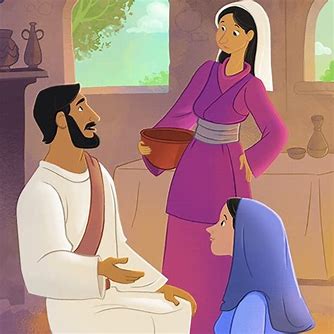
What Martha was doing wasn’t wrong; however, what she was doing caused her frustration and resentment. I love the fact that, instead of tapping Mary on the shoulder and giving her the nod to join her in the kitchen, Martha goes straight to Jesus to complain, most likely expecting Jesus to tell Mary to get up and serve alongside her sister. But, instead, what does Jesus say to Martha? “You are worried and upset about so many things, but only one thing is necessary.”
So even as Jesus corrects Martha, He shows that He recognizes her. He sees her and her struggle. He doesn’t simply tell her, “You’re doing it wrong.” He starts with, “You are anxious and troubled.” Then He goes on to show her troubles are self-inflicted.”[ii]
Martha needed to make some major adjustments in her life; adjustments that maybe she didn’t want to make. Adjustments that she thought were counterproductive. Adjustments that didn’t seem reasonable to her because, after all, she was busy doing good things. “Any adjustment God expects you to make is for your good.” (EG, pg. 161)
Take a look at activity #5 on page 161. What is one adjustment you’ve made in your thinking since starting this course?

There have been several “ah-ha” moments for me in this. But one of the most major adjustments is what I do with my resources and my time. It’s easy to fall in the trap of mindless television watching, or spending hours perusing the internet, playing games, reading books, etc. Those things aren’t necessarily wrong things to do, but are they what’s best for me? Are they necessary?
I’m going to ask you a question that I challenge myself with and I want you to really listen to what I’m saying and let it sink in. Are you spending your days, your time, and your resources or are you investing your days, your time, and your resources? Because there is a big difference.
Are you spending your God-given resources or are you investing your God-given resources?
I would say that if we are following our own agenda, our own plans, and fulfilling our purposes without making necessary adjustments to align ourselves with God’s agenda, God’s plans, and God’s purposes, then we are only spending what we have and we are not investing.
You may be like Martha doing good things but for the wrong reason and the adjustment that God is calling you to make is to stop being so busy and simply sit at His feet. “Adjusting one’s life to God is well worth the cost.” (EG, pg. 157)
“You cannot stay where you are and go with God. You cannot continue doing things your way and accomplish God’s purposes. Your thinking cannot come close to thinking like God. For you to do the will of God, you must adjust your life to Him, His purposes and His ways..
- I cannot stay where I am and go with God at the same time.
- Obedience is costly to me and to those around me.
- Obedience requires total dependence on God to work through me.” (EG, pg. 164)
What are some ways obedience is costly to those around us? It goes back to that ripple effect we’ve been talking about since the first session. Radical changes that take place in our lives will affect those around us.

I’ll give you an example most of you can probably identify with. There are a lot of popular TV shows that have become hot topics. These shows are ones in which everyone seems to be watching and talking about. Think Stranger Things, Game of Thrones, Breaking Bad, and Yellowstone. The popularity of these shows draws people in. We want to know what everyone’s talking about and know the characters and the storylines. About a year ago, my husband and I were watching Yellowstone. The scenery was gorgeous, and the storylines were intriguing, but the language was vulgar and offensive. As much as I was interested in seeing how the storylines played out, the conviction of using the time that God gave me, the gift of hearing that God gave me, and the gift of sight that God gave me to watch and listen to something that I knew was displeasing to God was enough to turn it off and never watch it again. My husband was totally invested in the show and wanted to see how things turned out, but I wouldn’t watch it anymore. That was a minor adjustment for both of us. But sometimes, the adjustments are major.
“The distance from where we are to where God is in any one of these areas {circumstances, relationships, thinking, commitments, actions, and beliefs} requires a major shift. If you don’t think it requires a major adjustment, you may have underestimated God and overestimated your own ability! The adjustments may be gradual over time so they don’t seem so major at once, but these are all huge adjustments.” (EG, pgs. 160 & 161)

At the bottom of page 164 is this eye-opener. “We say Christ is Lord, and He can interrupt our plans anytime He wants. We just don’t expect Him to do it! We assume He will affirm everything we are doing and never ask us to change anything we have planned.” (EG, pg. 164) That’s Martha, isn’t it? Had she known that Jesus was going to take Mary’s side, would she have approached Him?
What we need to understand is that at any moment, God may call on us to make a major adjustment and it’s our responsibility and duty to be ready to make that adjustment. Martha needed to sit down. That was Martha’s major adjustment.
But know this. This story isn’t Martha vs. Mary. This story isn’t about one who is wrong and one who is right. This story is about making adjustments that balance us to where God wants us. It’s about adjusting so that we are not only worshipping God, but we are serving God. We’re not only studying God’s Word, but we are also sharing God’s Word. We’re not learning about God; we’re living with God. We’re not just praying to God but also listening to God. We’re not just acknowledging that we are far from where God wants us to be, we are making adjustments to get closer to where He wants us. And we cannot do any of this successfully on our own. We may try, but we will fail. Obedience does not come naturally to sinners.
“Obedience requires total dependence on God to work through me.” (EG, pg. 176) And that requires total surrender. Are you willing? Are you really willing to surrender your circumstances? Relationships? Thinking? Commitments? Actions? Beliefs? Time? Resources?
“If we never become the person of God that He wants us to be it doesn’t just cost us. It also costs others because we never did what God wanted to equip us to do.” (EG, pg. 177)
[i] What Does Renounce Mean in The Bible? – Verse And Prayers
 Beacons of Light