
Our scripture for today is simply Matthew 6:9 ESV “9 Pray then like this: ‘Our Father’”.
Our goal is to take our prayer life out of the shallow end and into the deep end. Let’s dig a little deeper into the significance of this first part of the Lord’s Prayer.
We know from last week’s lesson that The Lord’s Prayer is recited twice in scripture. The first was in the Sermon on the Mount and the second time was with His disciples. Think for just a moment. What demographic was His primary audience in both situations? These were Jewish people – God’s chosen. A central part of their ethnicity was the education of the law of God, the Torah. Little children were taught the basics of their religion, including the recitation of prayers. Jesus’ audience knew how to pray, but through Jesus, they learned to go deeper and more intimate in those prayers.
“All through the Old Testament account of God’s dealing with His people, He is referred to as YAHWEH, the name which dared not be spoken for fear of offense. Fewer than seven times is He even referred to as a father, except indirectly and rather remotely.”[i]
Let’s take a look at the history of the name YAHWEH. Remember when Moses encounters the burning bush and God tells Moses what He wants him to do. Moses has a lot of questions and one of those questions was, “Who should I say has sent me?”. This was God’s response.
Exodus 3:15 NOG “Yahweh Elohim of your ancestors, the Elohim of Abraham, Isaac, and Jacob, has sent me to you. This is my name forever. This is my title throughout every generation.”
God tells Moses, YAHWEH is His name. Elohim is His title. In English, it’s written as LORD God. (LORD in all caps “is a replacement for an occurrence of God’s Hebrew name ‘YHWH’”. Lord with just the “L” capitalized usually refers to the Hebrew name Adonai.)[ii]
Elohim in Hebrew means “God, Creator, Mighty and Strong”. Yahweh in Hebrew of course means LORD (all caps) but the “name specifies an immediacy, a presence.”[iii]
Let’s go back a little further. All the way back to Genesis and I’m going to summarize some of Genesis 1 & 2.
Genesis 1:1 NOG “In the beginning Elohim created heaven and earth.”
3 Then Elohim said, “Let there be light!” 5 Elohim named the light day, and the darkness he named night.
10 Elohim named the dry land earth. The water which came together he named sea. Elohim saw that it was good.
14 Then Elohim said, “Let there be lights in the sky to separate the day from the night to shine on the earth.”
20 Then Elohim said, “Let the water swarm with swimming creatures, and let birds fly
25 Elohim made every type of wild animal, every type of domestic animal, and every type of creature that crawls on the ground. Elohim saw that they were good.
26 Then Elohim said, “Let us make humans in our image, in our likeness.
31 And Elohim saw everything that he had made and that it was very good. There was evening, then morning—the sixth day.
Genesis 2:2 NOG “2 By the seventh day Elohim had finished the work he had been doing. On the seventh day he stopped the work he had been doing. 3 Then Elohim blessed the seventh day and set it apart as holy, because on that day he stopped all his work of creation.
In all of those verses, how is God referred? Elohim. God’s title signifying “Creator, mighty and strong.” iiie
In chapter 2 of Genesis, we’re given greater detail about the creation of man and the beginning of God’s relationship with Adam and Eve. Listen to how God is identified beginning in verse 4 of chapter 2 of Genesis.
“4 This is the account of heaven and earth when they were created, at the time when Yahweh Elohim made earth and heaven.” (Genesis 2:4 NOG)

Let’s summarize the rest of Genesis 2.
5 Wild bushes and plants were not on the earth yet because Yahweh Elohim hadn’t sent rain on the earth.
7 Then Yahweh Elohim formed the man from the dust of the earth and blew the breath of life into his nostrils. The man became a living being.
8 Yahweh Elohim planted a garden in Eden, in the east.
15 Then Yahweh Elohim took the man and put him in the Garden of Eden to farm the land and to take care of it. 16 Yahweh Elohim commanded the man. He said, “You are free to eat from any tree in the garden. 17 But you must never eat from the tree of the knowledge of good and evil because when you eat from it, you will certainly die.”
18 Then Yahweh Elohim said, “It is not good for the man to be alone. I will make a helper who is right for him.”
19 Yahweh Elohim had formed all the wild animals and all the birds out of the ground. Then he brought them to the man to see what he would call them. Whatever the man called each creature became its name. 20 So the man named all the domestic animals, all the birds, and all the wild animals.
But the man found no helper who was right for him. 21 So Yahweh Elohim caused him to fall into a deep sleep. While the man was sleeping, Yahweh Elohim took out one of the man’s ribs and closed up the flesh at that place. 22 Then Yahweh Elohim formed a woman from the rib that he had taken from the man. He brought her to the man.”
In these verses, we see a change from Elohim to Yahweh Elohim or God to LORD God. Even more specifically, the reference goes from the Supreme and Mighty Creator to His intimate and personal name (Yahweh) along with His title. This shift represents the establishment of a relationship between God and man.
But watch what happens in the next chapter. It’s sneaky, it’s conniving, and it’s deliberate.

Genesis 3:1 NOG “The snake was more clever than all the wild animals Yahweh Elohim had made. He asked the woman, “Did Elohim really say, ‘You must never eat
the fruit of any tree in the garden’?”
2 The woman answered the snake, “We’re allowed to eat the fruit from any tree in the garden 3 except the tree in the middle of the garden. Elohim said, ‘You must never eat it or touch it. If you do, you will die!’”
The serpent approaches Eve and take note of how he refers to God. Elohim. In fact, every instance in which the serpent refers to God, he only uses Elohim. Why would that be significant? It’s significant because Satan inconspicuously omits the personal name of God and, as a result, emphasizes the greatness, the mightiness, but mostly the unapproachableness of God. Just by the mere omission of the name Yahweh, Satan depersonalizes and distances God from Eve. Because when Eve responds to the serpent, she herself refers to God as simply Elohim.

With the introduction of sin, the relationship between God and His people became fractured.
The Jews knew of God. They knew about the rituals, the sacrifices, the festivals, and laws. They knew of His wrath and punishments. Their perception of God involved plagues, floods, destruction, and bloodshed. Their vision of God after the exodus was the cloud by day and fire by night. Eerie, mysterious, and somewhat abstract.
But then Jesus came along and His perception of God was different. “Jesus did nothing to diminish the reverence, nothing to minimize the power of God. Jesus made that powerful God knowable. Jesus didn’t introduce them to a new God. He was abundantly clear about that. ‘I have not come to abolish them [the Law or the Prophets] but to fulfill them.’ Jesus prayed to the revered God of power and judgment with the familiarity of the term Father.”[iv]

Jesus sought to re-establish the relationship between Yahweh Elohim and the Jews. He was teaching them to pray to God as their Father and not God as just Creator, Judge, Lawgiver, Dictator, and Punisher.
God was always Abba’s Father to the Jews, but sinfulness distorted them so that they didn’t see Him that way. In fact, it was considered blasphemous for Jesus to refer to God as Father. Remember when Jesus healed the man at the pool?
John 5:15 NIV “15 The man went away and told the Jewish leaders that it was Jesus who had made him well.
16 So, because Jesus was doing these things on the Sabbath, the Jewish leaders began to persecute him. 17 In his defense Jesus said to them, “My Father is always at his work to this very day, and I too am working.” 18 For this reason they tried all the more to kill him; not only was he breaking the Sabbath, but he was even calling God his own Father, making himself equal with God.”
The Jew and Jewish leaders weren’t comfortable thinking of God in this manner. The fact that Jesus referred to God as His Father angered them and they wanted to kill Him because of it.
What Satan had done all those years before was more than just have Eve unwrap sinfulness. He had also managed to depersonalize God in the eyes of the Jews and create an image of One who was anything but paternal.
Jesus, however, came to us so that we might see God in a different manner. Matthew 1:23 NIV “ 23 The virgin will conceive and give birth to a son, and they will call him Immanuel” (which means “God with us”) which circles back to the meaning of Yahweh indicating “an immediacy, a presence”.iii
If I may give a worldly example of this. The Wizard of Oz is a classic movie and we know the storyline. Dorothy and her friends keep hearing about the Great Wizard of Oz. They’re anxious to meet with the wizard because of his great power and wisdom, but they’re also a bit intimidated by him. When they finally arrive in Oz, people are just aghast that Dorothy and her friends request to see the great wizard. After much preparation, they get an audience with him.
This loud booming voice echoes throughout the chamber and a green smoky projection of a harsh and mean creature hovers over pools of fire. Dorothy and her friends are terrified. The Cowardly Lion trembles. There is nothing warm and welcoming about this great wizard. Instead, there is fear and trepidation.
Later on in the movie, back in the wizard’s chamber, Toto, Dorothy’s dog, jumps from her arms and pulls back the curtain revealing the true identity of the Great Wizard of Oz. He’s kind and caring, he’s likable and much easier to approach. After the curtain is removed, Dorothy and the others form a relationship with the wizard whose real name is Oscar Zoroaster Phadrig Isaac Norman Henkle Emmannuel Ambroise Diggs.[v]
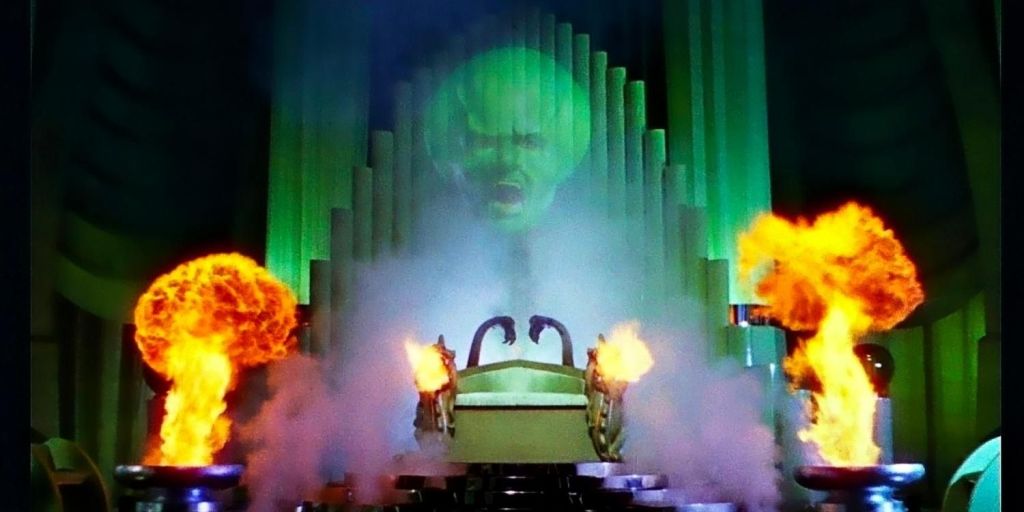

Jesus literally and figuratively tore down the curtain so that we could see and experience the Father side of God and of course, unlike the wizard, God is truly powerful, all-knowing, unlimited, and far more able than we could ever comprehend. When the curtain was removed, we weren’t disappointed or letdown. Instead, we were able to see the loving, nurturing side of God that the Jews had not known.
When Jesus taught the Jews to pray to God as Father, He was re-establishing the intimate and personal relationship that God had begun with Adam and Eve. It doesn’t mean that we are to be any less reverent, but to acknowledge God as our Father defines our relationship with Him and with each other.
The word “our” implies the family dynamics between us and God as well as us and our brothers and sisters in Christ.
The paternal term of “Father” emphasizes God’s role in our life as Provider and Protector.
Beginning our prayers acknowledging God as our Father places us in the mindset of a family relationship based on love, trust and intimacy.
The relationship we have with God that we often neglect to realize is that it’s unconditional. “His care and concern and affection for us are not dependent upon His moods or our good behavior or our response to His overtures. Rather, it flows out to us in a clear, pure, powerful stream that has as its source and strength His own great heart of love. It is constant and unconditional.”i
As mentioned earlier, in the Old Testament, God is referred to Father fewer than seven times.i” “Yet in the first four gospels, Jesus, the Christ, casting aside all restraint, speaks of God as Father more than seventy times.” “Suddenly it puts man’s relationship to Him into an entirely new light. He moves from behind the bar of justice to come knocking on the door of our human hearts. He enters our lives to become a ‘Father to the fatherless.”i
As we celebrate Christmas by giving and opening gifts, consider the great gift God gave us in Jesus Christ. Matthew 7:11 GNT “As bad as you are, you know how to give good things to your children. How much more, then, will your Father in heaven give good things to those who ask him!”

[i][i] W. Phillip Keller, A Laymen Looks at the Lord’s Prayer.
[ii] What do LORD, GOD, Lord, God, etc., stand for in the Bible? Why are they used in place of God’s name? | GotQuestions.org
[iii] What are the different names of God, and what do they mean? | GotQuestions.org
[iv] Tyler Staton, Praying Like Monks, Living Like Fools
 Beacons of Light