
What are some words that you would use to describe God?
Almighty
Faithful
Loving
Perfect
Indescribable
Everlasting
Powerful
Majestic
Let’s take a few of these and consider them a little more closely.
What circumstances or situations cause you to describe God as:
Almighty? When the impossible becomes possible?
Faithful? When prayers are answered?
Everlasting? When you’re reading His Word and finding it to be just as meaningful today?
What about the description of “majestic”? What stirs you to think of God as being majestic?

There is something about nature that conjures up the word majestic. A brilliant sunset. The Grand Canyon. A mountain range in Autumn. The ocean at the break of dawn. A lion in its natural habitat. Niagra Falls. Tangible things whose beauty and splendor can only be credited to God.
To people in other parts of the world, majestic would indicate someone of royal descent or one with regal authority.
The key point to our lesson today is that “God is majestic and exalted by everything He does.”[i]
How would you define the majesty of God? It’s almost indescribable, isn’t it?
I like to look up definitions because I have trouble giving a definition without using the word I’m trying to define. For example, if I had to define a spreadsheet, most likely my response would be, “You know a sheet with columns and rows that are spread out that give information. You know, a spreadsheet.” Some words define themselves. They are called “autological words”.[ii] Some examples would be “word” or “noun” or “English”. It is difficult to define these words without using the words themselves.
God’s majesty should be the same way for us. Difficult to define without using God’s name or the word majesty itself. Because it is difficult to define and part of that is because the majesty of God is personal to each of us and most likely we all have our own personal definitions.
God is defined as “the creator and ruler of the universe and source of all moral authority; the supreme being.”[iii]
The word majesty is defined as “sovereign power, authority, or dignity”[iv]
Using man’s words from authoritative dictionaries, the majesty of God could be defined as ‘the power, authority, and dignity of the Supreme Being, The Creator and Ruler of the universe and Source of all moral authority.
Would you agree that if we truly recognized and appreciated the majesty of God we would remain in a perpetual state of praise and constantly being in awe of Who He is and What He’s doing?
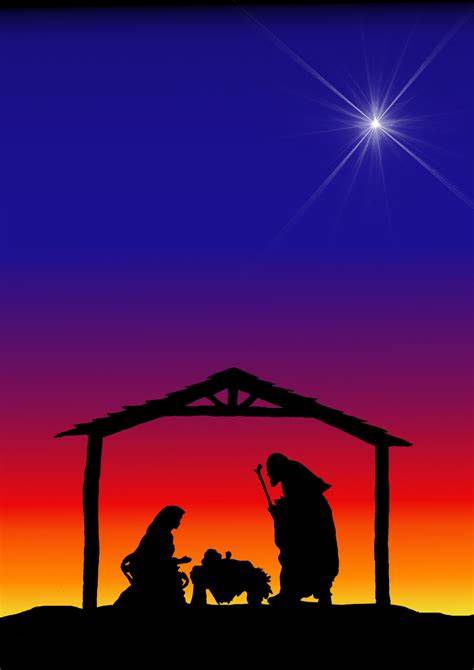
We’re just a few weeks from Christmas and of course, we’re acknowledging the birth of Jesus, the incarnation of Jesus in flesh and bone, the humbleness of His beginning here on Earth. In doing so, we experience an abundance of amazement at His willingness to leave Heaven and come to Earth, not as a grown and capable king flanked by soldiers and servants, but rather as a newborn and helpless baby boy whose first breaths were taken among lowly animals. He who is without sin willingly came to live in a sinful world. And we’re in awe of that.
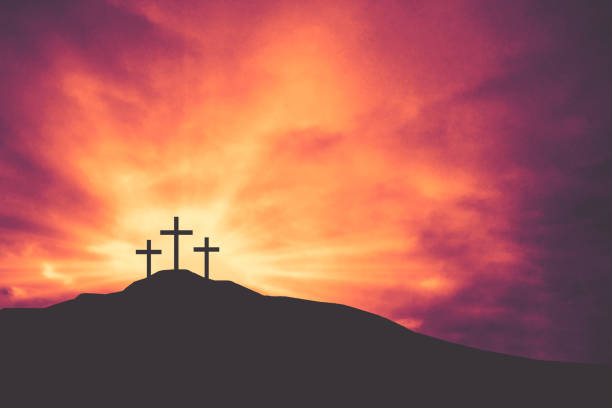
And then in a few months, we’ll be focused on the cross and the sacrifice that Jesus made for us, individually. We’ll talk about the brutal beatings, the horrific treatment and disrespect he experienced, but also the loving and unfathomable forgiveness He demonstrated even on the cross. We’ll find ourselves realizing that we are in no way worthy of that kind of love or that level of forgiveness. And once again, we’ll be in awe of that.
But the rest of the year, in our day-to-day lives, are we allowing ourselves to experience the awe of God’s majesty?
I was out walking one day this week. I was going along my usual route, doing my usual thing, and I started noticing crunching noises as I walked. This time of year, of course, it was the massive collection of leaves gathered in piles all along the way. For some reason, I became more and more aware of the different types of leaves. Some were rounded, others were pointed, some had curled up while others were still flat. Some had long stems, others had short stems. Most of the leaves at this point have died and dried up so their colors have faded. But just a few weeks ago, my walks were done on colorful carpets of leaves.

Curiosity got the best of me while I was out walking so I “Googled” ‘how many species of leaves are there’? This is the closest answer I could get. “There are billions of leaves globally and thousands of different expressions and shapes.”[v]
What really fascinated me, though was learning that leaves are thought to have unique markings that are similar to our fingerprints. These markings can identify where it came from as well as provide information on how “circulatory networks differ in plants exposed to different environmental factors [which] could lead to insights about their adaptations to climate change.”[vi]
Now, I couldn’t help but wonder why God went through so much trouble in creating so many different species of leaves and to make them so unique from one another. So I did a little more searching.
An 8-year-old wrote in to Billy Graham’s organization and asked this question. “I am 8 years old and I would like to ask you a question. Why did God make so many different animals and insects and plants, and things like that? Couldn’t He have just made a few of each kind, instead of millions of them?”
Part of the answer to that 8-year-old was this: “Everything around us was created by God, and it all tells us what He is like. The psalmist in the Bible put it this way: “The heavens declare the glory of God; the skies proclaim the work of his hands” (Psalm 19:1).
In other words, when we look at the world through the eyes of faith, we realize just how great and wonderful God is—far greater than we can fully understand. The Bible says, “He has made everything beautiful in its time. He has also set eternity in the hearts of men; yet they cannot fathom what God has done from beginning to end” (Ecclesiastes 3:11). God made everything in the universe, and it all tells us how great and wise He is.”[vii]
What began as an ordinary walk on an ordinary day walking on ordinary leaves became a time of authentic worship for me. The majesty of God, the sovereign power and authority of God became more real to me with ordinary, everyday objects (leaves) that we walk on, sweep up, rake up, blow away, bag up, and burn. And I couldn’t help but feel that we live so much of our lives with the “majestic filter” off our eyes and we miss so much that should cause us to be in awe.
The majesty of God is compared in Psalm 76:4 NLT “You are glorious and more majestic than the everlasting mountains.”
The glorious majesty of God is described in Job 37:21 AMP ““Now people cannot look at the light when it is bright in the skies [without being blinded],
When the wind has passed and cleared them.
22
“Out of the north comes golden splendor [and people can hardly look on it];
Around God is awesome splendor and majesty [far too glorious for man’s eyes].
The majesty of God’s voice is referenced in Psalm 29:4 BRG “The voice of the Lord is powerful; the voice of the Lord is full of majesty.”
King David is known for his poetic praise of God. Our scripture comes from Psalm 138.
1-3 “Thank you! Everything in me says “Thank you!”
Angels listen as I sing my thanks.
I kneel in worship facing your holy temple
and say it again: “Thank you!”
Thank you for your love,
thank you for your faithfulness;
Most holy is your name,
most holy is your Word.
The moment I called out, you stepped in;
you made my life large with strength.”
We don’t know what was happening in David’s life when he penned this. Perhaps it was a major event, or it may have just been one of those moments in which David took inventory of all that God had done for him and he was overcome with emotion and thankfulness. David certainly had his fair share of ups and downs in his life. A shepherd boy, a king, an underdog, a conqueror, a friend, a threat, an adulterer, a murderer, a repentant one, and most importantly, a man after God’s own heart.
Acts 13:22 NIV tells us, “God testified concerning him: ‘I have found David son of Jesse, a man after my own heart; he will do everything I want him to do.’”

I don’t think anyone would disagree that David not only did everything that God wanted him to do, but he also did some things God didn’t want him to do. David was, by no means, perfect. What set David apart and how he was a man after God’s own heart is how David perceived God.
I love studying David. Despite his major mess-ups and total disregard for doing what was right, I love how God still refers to him as “a man after my own heart.”
David had a unique relationship with God. He relied on God and trusted Him. He strived to be obedient to God’s laws though he wasn’t always successful. Unlike many others, then and now, when he sinned, he took ownership of his wrongdoings. And he would go to God with a sorrowful and repentant heart. He didn’t insult God by making excuses. David was very much aware of God’s greatness and His majesty.
David had a deep appreciation of God. 1 Chronicles 29:10-11 NKJV ““Blessed are You, Lord God of Israel, our Father, forever and ever
11 Yours, O Lord, is the greatness,
The power and the glory,
The victory and the majesty”
David was humble. 2 Samuel 7:18 NASB “Then David the king came in and sat before the LORD, and he said, “Who am I, Lord GOD, and who are the members of my household, that You have brought me this far?”
David was awe of God. Psalm 33:8 NASB “Let all the earth fear the LORD; Let all the inhabitants of the world stand in awe of Him.”
Despite David’s shortcomings, or perhaps because of them, David had a reverence for God that we should all strive for.
Listen to the words of Psalm 8 ESV. This passage will mostly be familiar to you.
How Majestic Is Your Name
To the choirmaster: according to The Gittith.[a] A Psalm of David.
8 O Lord, our Lord,
how majestic is your name in all the earth!
You have set your glory above the heavens.
2 Out of the mouth of babies and infants,
you have established strength because of your foes,
to still the enemy and the avenger.
3 When I look at your heavens, the work of your fingers,
the moon and the stars, which you have set in place,
4 what is man that you are mindful of him,
and the son of man that you care for him?
5 Yet you have made him a little lower than the heavenly beings
and crowned him with glory and honor.
6 You have given him dominion over the works of your hands;
you have put all things under his feet,
7 all sheep and oxen,
and also the beasts of the field,
8 the birds of the heavens, and the fish of the sea,
whatever passes along the paths of the seas.
9 O Lord, our Lord,
how majestic is your name in all the earth!”
In this psalm, you can sense the overwhelming appreciation and respect that David has for God. “Psalm 8 explores the theme of God’s majestic splendor and our puny insignificance by way of comparison. And yet at the same time, God has created us in His image and graciously crowned us with glory and majesty. He has assigned us the role of ruling over His creation. All of these thoughts should lead us, as the psalm both begins and ends (Ps. 8:1, 9), to declare in worship, “O Lord, our Lord, how majestic is Your name in all the earth!”ii
David declared over and over the majesty of God but also, David declared the majesty of God’s name. In this one song, David acknowledges God as Yahweh (the first LORD), and as Adonai (the second Lord). In doing so, he addresses God as “Our God is our Master”.[viii]
David is mesmerized by the works of God’s fingers – the moon, the stars, the beasts of the field, birds of the heavens, and fish of the sea, and everything else crafted by God. But he’s even more mesmerized by the fact that God even acknowledges us, mankind, and has put us in charge of the works of His hands.
“O Lord, our Lord, how majestic in Your name!”
“To try to comment on verse 1 is kind of like commenting on the splendor of the Grand Canyon. Words really can’t do it justice. You just need to get out of the way and let people see it!”ix
King David does as good of a job as anyone could in describing the majesty of God and the majesty of God’s name. “God’s name refers to who He is and what He has done, as revealed in His Word.”ix We talk about the goodness of God, but “What we’re talking about here is the God-ness of God. It’s an awkward expression. This is the most perfect Being, God. There’s a sense in which He has revealed Himself and we know who He is. We know who He is in the full complex of His attributes, in His works, and in His decrees, but there’s a sense in which God is a mystery.”[ix]
The God-ness of God
David was a man after God’s own heart because he recognized, respected, and revered the majesty of God and His name. David lived his life in awe of Who God was, and what God had done even though he didn’t always understand the “why” or the “how”. David simply accepted the fact that God was great and he was not. So, how do we start today living more like David, a man after God’s own heart? A man who lived his life recognizing the God-ness of God and praising Him.
“Our God is so great, so admirable, so wonderful, so awesome in the eyes of his people, and so fearsome to his enemies, that the Hebrew kavod, Greek doxa, and English glory will not suffice. That is, not for his worshipers. We need more terms. We press more words into the service of worship. As we seek to keep speaking of him in his beauty, his power, his greatness, his glory, we grope for language: dominion, authority, splendor, majesty. At times, we even pile words upon words, as Psalm 145:5 does with “the glorious splendor of your majesty.”[x]
Louie Giglio gives us a way of appreciating the majesty of God. “This is an amazing thought: a God Who is indescribable.”
“David was most moved by the majesty and glory of God.”[xi]
[i] A Name Like No Other by Jere Phillips and Gregory T. Pouncey
[ii] Autological word – Wikipedia
[iii] God definition – Search (bing.com)
[iv] Majesty Definition & Meaning – Merriam-Webster
[v] Complete Guide To Different Types of Leaves with Pictures and Leaf Names (outforia.com)
[vi] Finding a plant’s ‘fingerprint’ in the veins of its leaves | Penn Today (upenn.edu)
[vii] Why did God make so many different animals and insects and plants? Couldn’t He have just made a few of each kind, instead of millions of them? (billygraham.org)
[viii] Enduring Word Bible Commentary Psalm 8
[ix] How would you describe the majesty of God? (ligonier.org)
[x] How Majestic Is Our Lord? | Desiring God
[xi] A Name Like No Other by Jere Phillips and Gregory T. Pouncey
 Beacons of Light