The sixth trumpet was sounded last week and four angels (most likely fallen angels) who were bound up at the Euphrates were released for the purpose of killing 1/3 of those left behind.
We talked last week that between the saved people being raptured, plus the ¼ of mankind who will be killed by the pale horse released by the 4th seal, those martyred, and now the 1/3 of mankind killed by these demonic angels, the population of the world will be diminished by ½.
We’re told an army of 200 million horses and riders will join these four angels. The description of the horses is probably as best as John can describe. He said their heads were like heads of lions. He tells us that out of their mouths came the deadly components that will kill 1/3 of the population. These three deadly components are fire, smoke, and sulfur.
At the end of chapter 9 of Revelation, John astonishingly tells us that despite all that is happening – the horrific and unprecedented events as well as these terrifying creatures – those who aren’t killed will still refuse to repent.
As is the pattern with the seals, we have six wraths and then a break or an interlude. You may recall that after the sixth seal is broken, there will be revival in Heaven before the seventh seal is broken. After the sixth trumpet, here again, we have a pause of mercy, so to speak.
Revelation 10:1 NIV “10 Then I saw another mighty angel coming down from heaven. He was robed in a cloud, with a rainbow above his head; his face was like the sun, and his legs were like fiery pillars. 2 He was holding a little scroll, which lay open in his hand. He planted his right foot on the sea and his left foot on the land, 3 and he gave a loud shout like the roar of a lion. When he shouted, the voices of the seven thunders spoke. 4 And when the seven thunders spoke, I was about to write; but I heard a voice from heaven say, “Seal up what the seven thunders have said and do not write it down.”
Let’s begin with who John sees. He sees an angel that is described as mighty. The angel is wrapped in a cloud with a rainbow above his head. His face is like the sun, and his legs are like columns or pillars of fire.
Flip back to Revelation 1 for a moment. Look at verse 7. “Look, Jesus is coming with the clouds!” Who is coming with the clouds? Okay, now take a look at verses 15 through 17 in Revelation 1. In verse 17 we see that this is Jesus Who is being described. Now, verse 15. How are His feet described? Like brass that glows hot. Now take a look at verse 16. Notice the last part. “He looked like the sun shining at its brightest time.”
Now flip over to Revelation 4:3. What is around the throne of God? A rainbow.
It’s no wonder that many read this account in Revelation 10 and assume this is Jesus. Many unique descriptions indicate this could be Jesus.
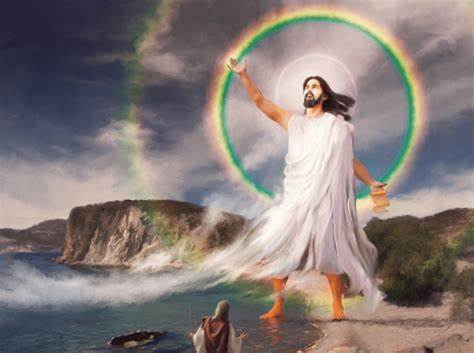
There are some who argue this is not Jesus, but rather, perhaps Michael the Archangel. First of all, John says he sees “another” mighty angel which indicates who he sees is like another. We know that there is no equal to Jesus. Also, John doesn’t refer to Jesus as an angel in the book of Revelation. The reason some believe this is the archangel Michael is because the name Michael means “who is like God” and therefore it seems likely that Michael would have similar characteristics.
Verse 2 of Revelation 10 tells us that John sees a scroll or a small book in this mighty angel’s hand. We were introduced to a scroll in Revelation 5. This is the scroll that was sealed with 7 seals. The original word used for scroll in Revelation 5 is different from the original Greek word used here in Revelation 10 so I believe this is NOT the same scroll that only Jesus was worthy to open. The book (or scroll) is open which indicates what is in it is to be revealed and not hidden. So what does this book contain?
There are many thoughts on this. Some believe it’s a list of men’s sins. (Somehow, I highly doubt a little book or scroll could contain such a list!) Some tend to think it’s the entire Word of God or perhaps just the book of Daniel. (Daniel 12:4 GNT “He said to me, “And now, Daniel, close the book and put a seal on it until the end of the world. )
Here’s what Warren Wiersbe says. “The little book contains the rest of the prophetic message that John will deliver. Since our Lord was the only One worthy to take the scroll and break the seals (Rev. 5:5ff), it might well be concluded that He is the only One worthy to give His servant the rest of the message.”[i] He continues to explain the one foot on the sea and the other on land by saying, “The angel’s posture is that of a conqueror taking possession of his territory. He is claiming the whole world (see Josh. 1:1-3). Of course, only the victorious Savior could make such a claim.”viii
If Warren Wiersbe and Lehman Strauss believe this is Jesus to whom John is referring, I’m comfortable accepting that for now.
We are told that when this mighty angel whom we presume to be Jesus shouts, the seven thunders speak. But as John goes to write down what is said by the seven thunders, he’s told to seal it up and not to write anything further. Obviously, what is said is not to be known to us for reasons only God knows. Now, who is the voice or voices behind the seven thunders?
1 Samuel 7:10 “but that day the Lord thundered with loud thunder”
Psalm 18:13 “The Lord thundered from the sky;
God Most High let his voice be heard.”
Job 37:4 “He thunders with His majestic voice,”
God’s voice is sometimes described as thunder. In fact, David wrote about the thunderous voice of God in Psalm 29 and the phrase “the voice of the Lord” is used seven times in that song with descriptions of His voice.
“The voice of the Lord is over the waters; the God of glory thunders; the Lord is over many waters. The voice of the Lord is powerful; the voice of the Lord is full of majesty. The voice of the Lord breaks the cedars, yes, the Lord splinters the cedars of Lebanon. He makes them also skip like a calf, Lebanon and Sirion like a young wild ox. The voice of the Lord divides the flames of fire. The voice of the Lord shakes the wilderness; the Lord shakes the Wilderness of Kadesh. The voice of the Lord makes the deer give birth, and strips the forests bare; and in His temple everyone says, “Glory!” (Psalm 29:3-9) [emphasis added]
In Psalm 29 David testifies to the authority, the power, and the control that God’s voice has.
Whether the seven thunders here in Revelation is God speaking or someone else and what is being said is simply not for us to know at this time and even though curious minds (like me!) want to know, we can only speculate.
Revelation10:5 “5 Then the angel I had seen standing on the sea and on the land raised his right hand to heaven. 6 And he swore by him who lives forever and ever, who created the heavens and all that is in them, the earth and all that is in it, and the sea and all that is in it, and said, “There will be no more delay! 7 But in the days when the seventh angel is about to sound his trumpet, the mystery of God will be accomplished, just as he announced to his servants the prophets.”
So, assuming this is Jesus standing with one foot on the sea and one foot on the land, He raises His right hand to heaven and takes an oath. Some scholars take issue with this and say that Jesus wouldn’t take an oath so therefore, this mighty angel can’t be Jesus. It just takes a little digging to see that God, Himself, took an oath with Abraham. Hebrews 6:13 ERV “God made a promise to Abraham. And there is no one greater than God, so he made the promise with an oath in his own name—an oath that he would do what he promised.” Later in verse 18, it’s reiterated. “18 These two things cannot change: God cannot lie when he says something, and he cannot lie when he makes an oath.” (Hebrews 6:18 ERV)
If God pledged an oath, why wouldn’t Jesus have done the same? But to what is Jesus affirming? He states that time is nearly up. There will be no more delay. In verse 7, he states, “7 God told his secret plans to his servants the prophets, and it will all happen by the time the seventh angel sounds his trumpet.” (Revelation 10:7 CEV)
You see, God’s been more than merciful. He’s given ample opportunity for those who have rejected Him or ignored Him to come to Him. “God has been delaying His judgments so that lost sinners will have time to repent (2 Peter 3:1-9); now, however, He will accelerate His judgments and accomplish His purposes.”vii
Jesus is mindful of the last trumpet judgment. Lehman Strauss explains. “Time will continue long after this event, but what He says is that when the seventh trumpet sounds, all evil in the earth will be put down without further delay. Sin has been reigning, and righteousness has suffered throughout man’s day on the earth, but now things must change. There must be a reversal of this order. The Mighty Angel’s affirmation means that the hour has struck.”[ii]
Which is what we all should want. God’s victory over evil. But are we ready?
John probably didn’t see this next thing coming.
Revelation 10:8 NIV “8 Then the voice that I had heard from heaven spoke to me once more: “Go, take the scroll that lies open in the hand of the angel who is standing on the sea and on the land.”

9 So I went to the angel and asked him to give me the little scroll. He said to me, “Take it and eat it. It will turn your stomach sour, but ‘in your mouth it will be as sweet as honey.’[a]” 10 I took the little scroll from the angel’s hand and ate it. It tasted as sweet as honey in my mouth, but when I had eaten it, my stomach turned sour. 11 Then I was told, “You must prophesy again about many peoples, nations, languages and kings.”
This isn’t the first time God’s word has been ingested. Jeremiah did it willingly. (Jeremiah 15:16) Ezekiel had a very similar experience as John. “ The Lord said, “Ezekiel, son of man, after you eat this scroll, go speak to the people of Israel.”
2-3 He handed me the scroll and said, “Eat this and fill up on it.” So I ate the scroll, and it tasted sweet as honey.” (Ezekiel 3:1 CEV)
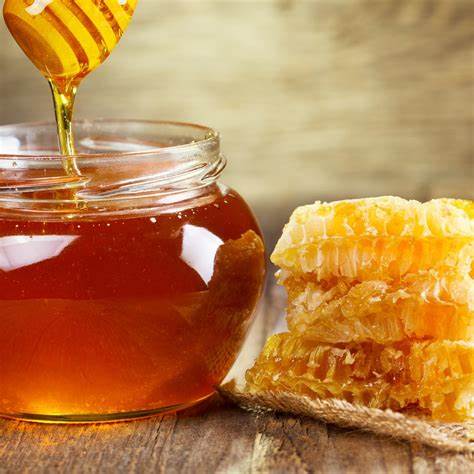
John takes the scroll (little book) and eats it. He, like Ezekiel, finds it to be sweet as honey in his mouth. But John’s experience takes an interesting turn. Once the scroll has been ingested, it turns his stomach sour. It’s bittersweet because we can’t have the promises, the mercy, the love, and the forgiveness of God without the judgment, the wrath, the discipline, and the perfection of God. “God’s Word contains sweet promises and assurances, but it also contains bitter warnings and prophecies of judgment.”viii
Food is used to describe God’s Word. Honey (Psalm 119:103). Bread (Matthew 4:4). Meat (1 Corinthians 3:1-2). Milk (1 Peter 2:2). We don’t get fed by merely smelling food or seeing it. We must eat it in order to be nourished. God’s Word is the same way. We have to feed on it, ingest it in order to live by it.
Many of us confess to not being able to memorize Scripture like we used to. I think that’s okay. But it shouldn’t discourage us from still taking in His Word and meditating on it. I confess that I often have to stop and ask the Holy Spirit to keep me from being distracted and to finetune my focus. It’s my belief that making an effort to study His Word and learning how to apply it so that we mature spiritually is much more pleasing to God than someone who can quote Scripture word-for-word, but that’s the extent of their connection.
God would rather us to experience a changing application rather than a shallow memorization of His Word.
John is given another assignment. Now that he has eaten the scroll he’s told to go out and share. “The seven thunders told me, “Again you must speak what God has revealed in front of many people, nations, languages, and kings.” (Revelation 10:11 GW)
Imagine the looks on the faces of those who hear the prophecy of what has, so far, been revealed to John. We know how difficult and uncomfortable it is for us to read John’s words in Revelation so just imagine the huge task put before him to speak about what he’s been shown. His work was not completed, and neither is ours.
I truly hope you’re taking time every day (or at the minimum, every other day) to not just read God’s Word, but to ingest it. It’s not enough to see it or just skim it to say you’ve read it. I’m talking about savoring His Word and experiencing the sweetness as well as the bitterness of it. As we more understand the sweet grace that God extends, our stomachs should sour at the realization of our sinfulness. We should be more aware of what God is saying to us personally through His Word.
“To read the Word of God without any reflection is like eating a meal without digesting.” Unknown
[i]Be Victorious by Warren W. Wiersbe
[ii] Revelation by Lehman Strauss
 Beacons of Light
thanks so much for sharing! I hate to miss being there in person but I so appreciate you sharing the lessons.
LikeLiked by 1 person